
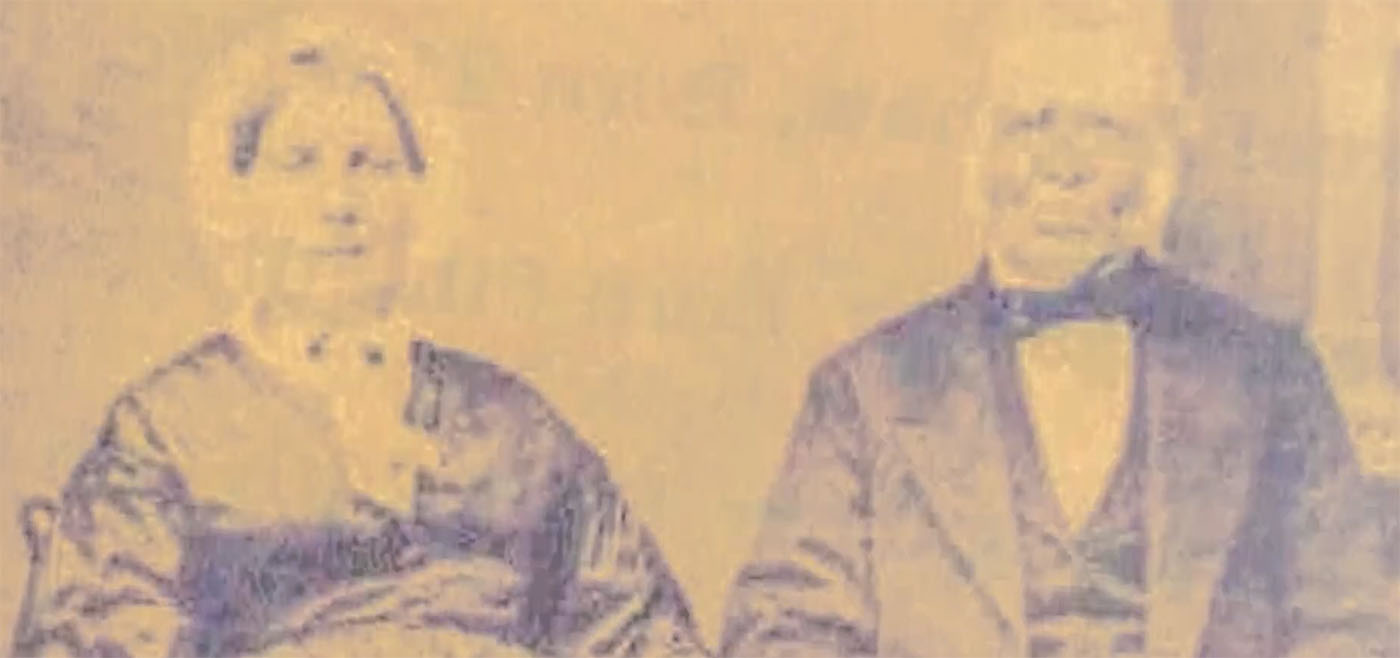
Explore artifacts connected to the Bagshaw family, among the first settlers of Brock Township. Housed at the Sunderland Museum, these items provide a window into the region’s early history.
The Bagshaw Collection
The Sunderland & District Historical Society has archived a wealth of artifacts that reflect the community’s rich history.
Here is a glimpse of some of the treasures that can be found in our museum.
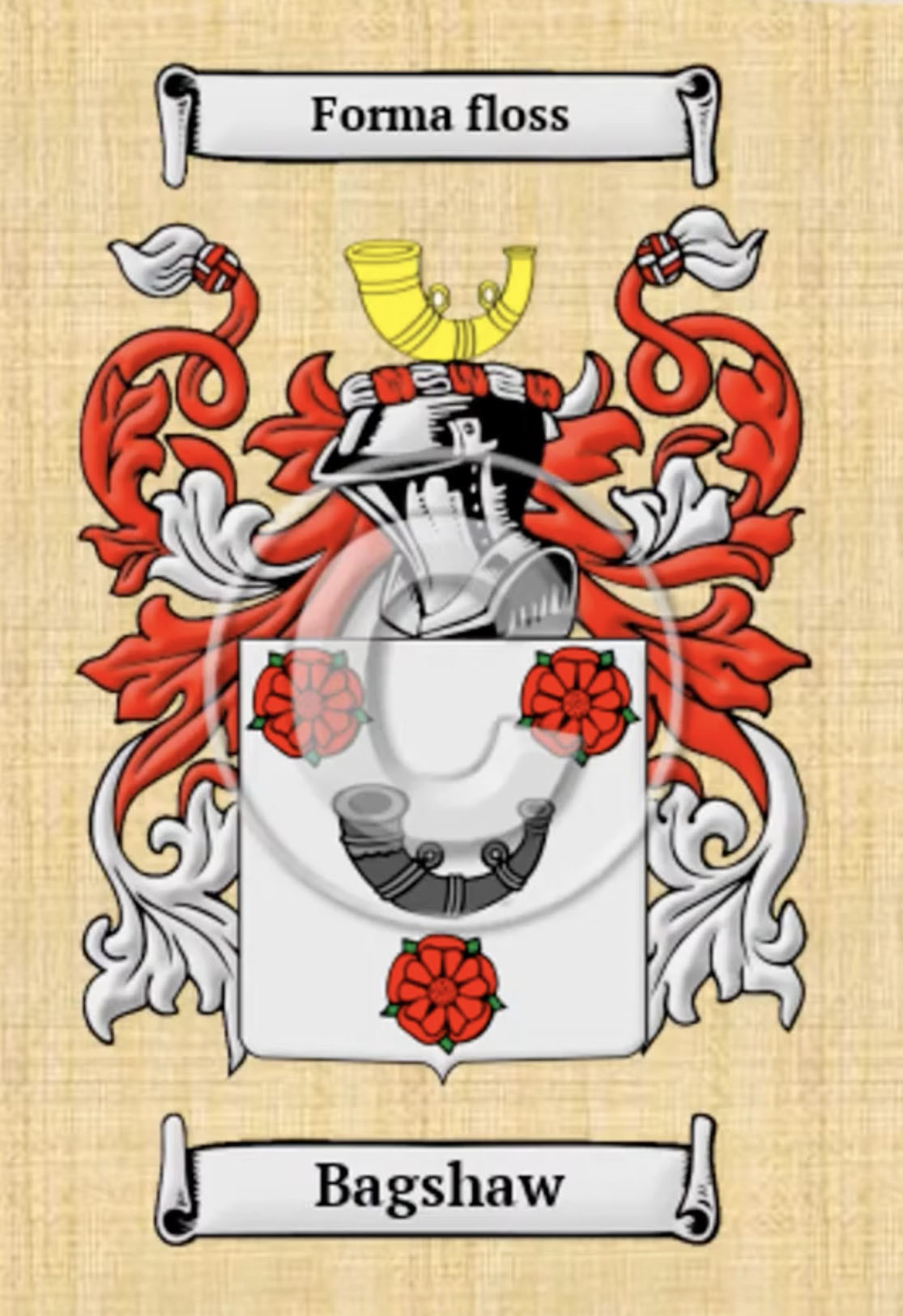
The museum has an image of the Bagshaw family crest on display.
The name Bagshaw is of Anglo-Saxon origin and is a habitational surname, from a place in Derbyshire, England.
The placename is derived from the Olde English, pre 7th century personal name “Bacga” and the Olde English word “sceaga” meaning wood or copse; hence Bacga’s Wood.
The family crest consists of three roses encompassing a hunter’s horn. The crest depicts a portion of the arm holding a hunter’s horn.
William Bagshaw was one of Brock Township’s earliest settlers.
Having fought for Britain in the Battle of Waterloo in 1815, as compensation, William was granted a parcel of land in Brock Township which had been surveyed in 1817. William selected a lot on the gth Concession and travelled alone to Canada to clear the land and establish a farm operation.
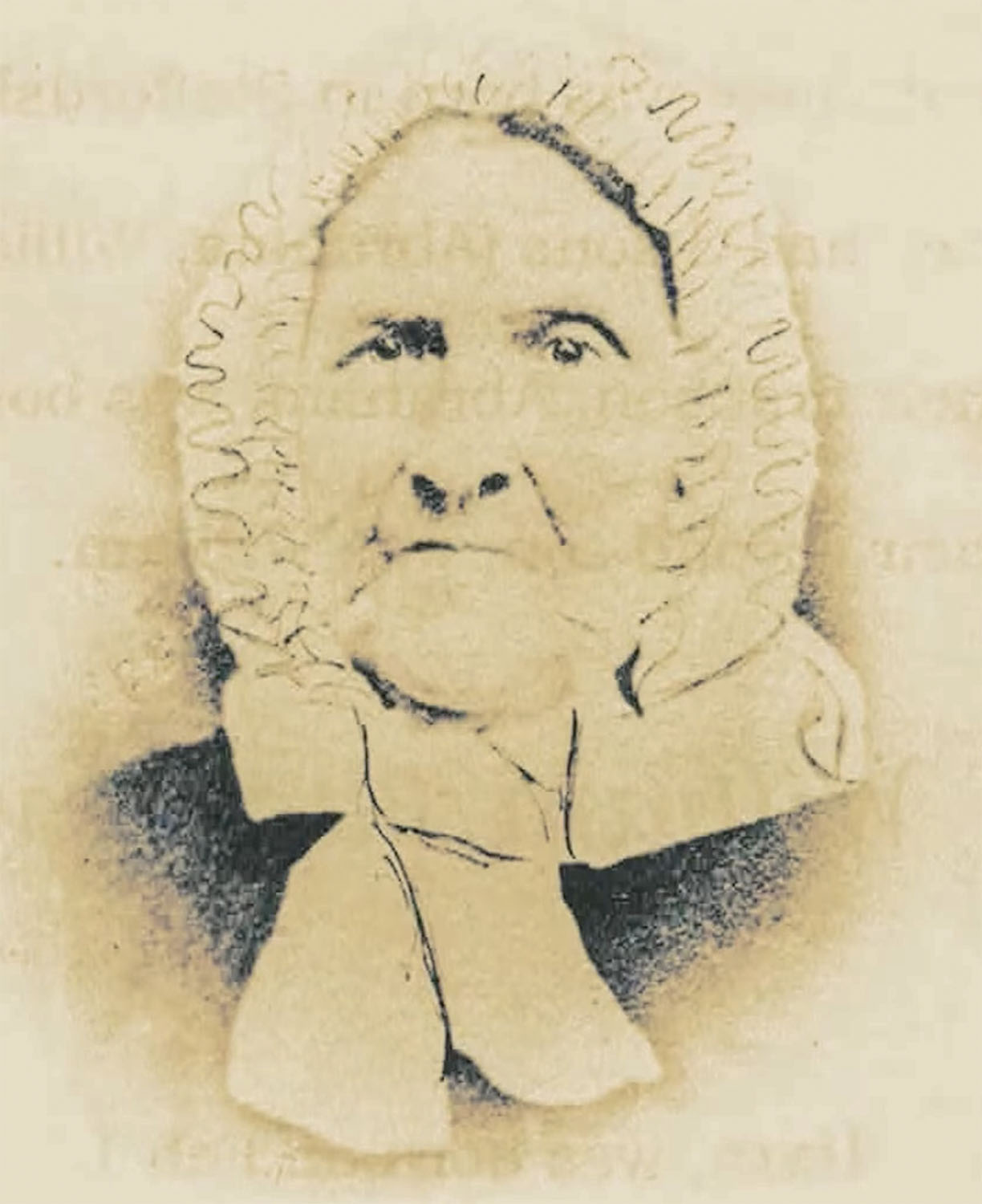
After her husband, William Bagshaw departed for Canada, his wife Sarah Bolton waited for nearly two years fearing that he may have perished. Finally, a letter arrived reporting that her husband was well and had established a farm in Brock Township.
Sarah left immediately for Canada. Her ocean crossing lasted 11 weeks. She was to meet William in York (Toronto) but a broken leg prevented him from leaving the farm.
She and her eight children then walked from York to Quaker Hill near Uxbridge where she remained an additional two months before joining William on the farm.
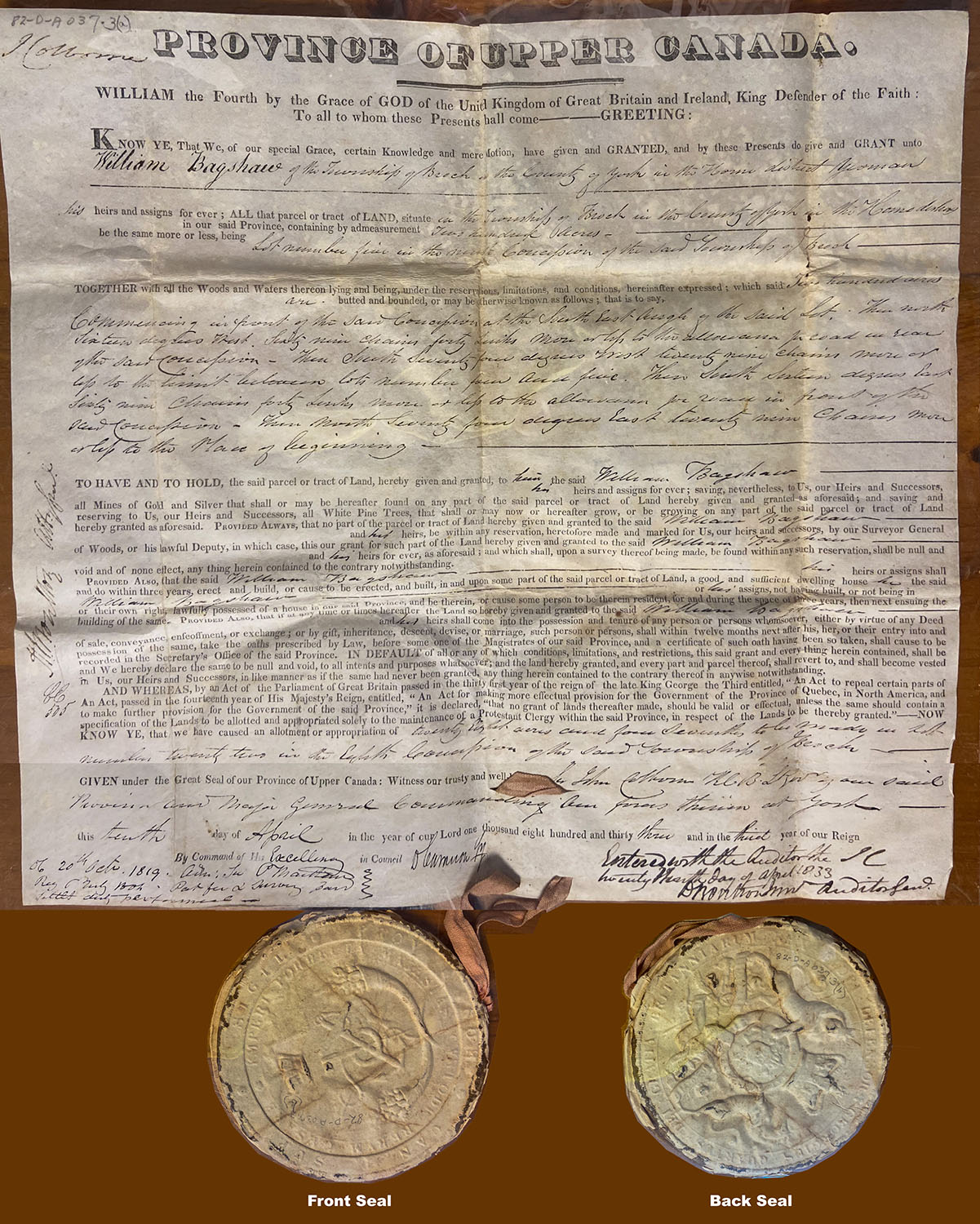
The original copy of William Bagshaw’s land grant certificate is on file at the museum.
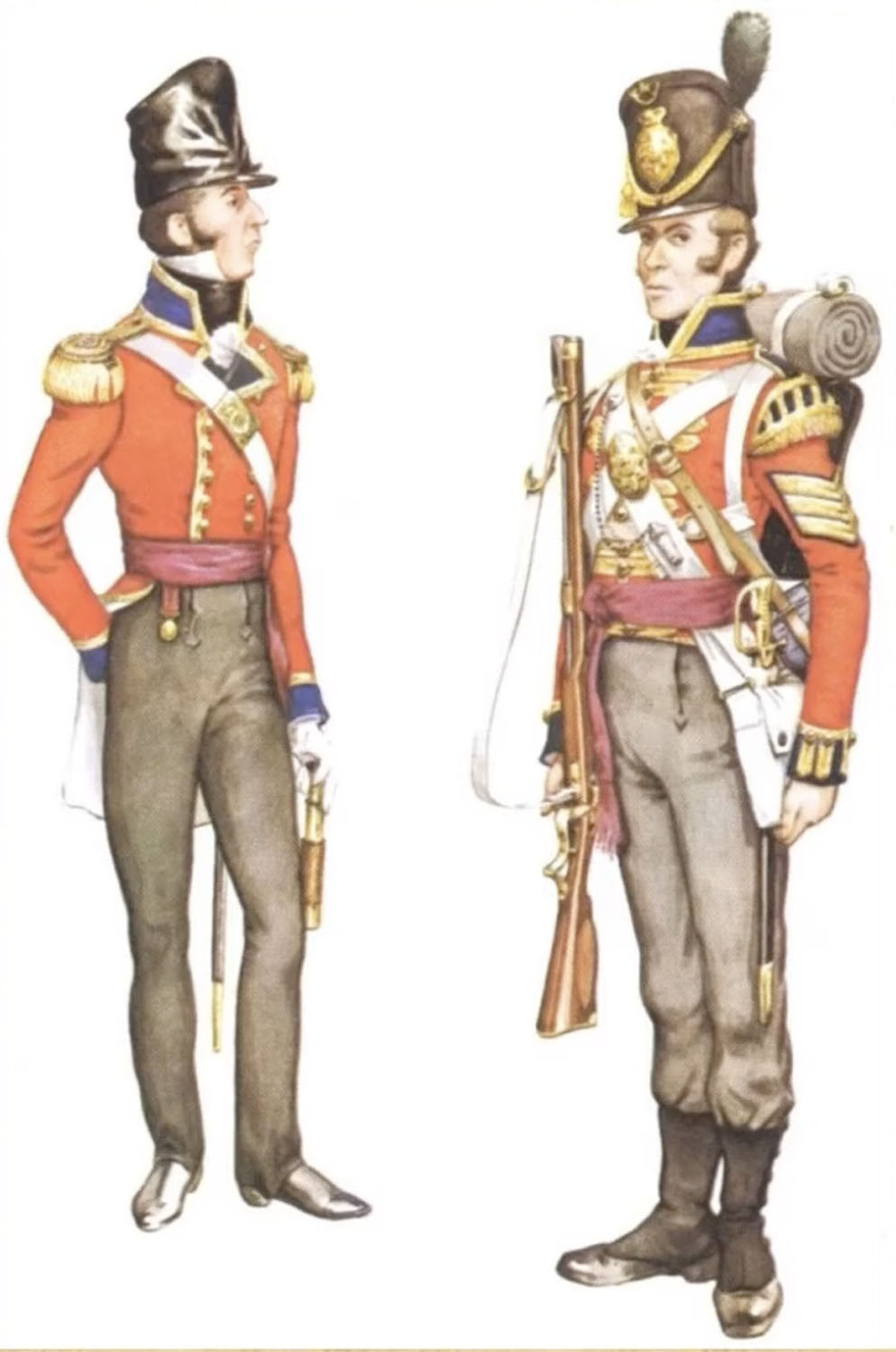
William Bagshaw’s survival at the Battle of Waterloo was significant. He served with the First Regiment of Foot Guards depicted to the left. During the battle, this unit suffered 1035 casualties out of a total of 1997 soldiers and officers.
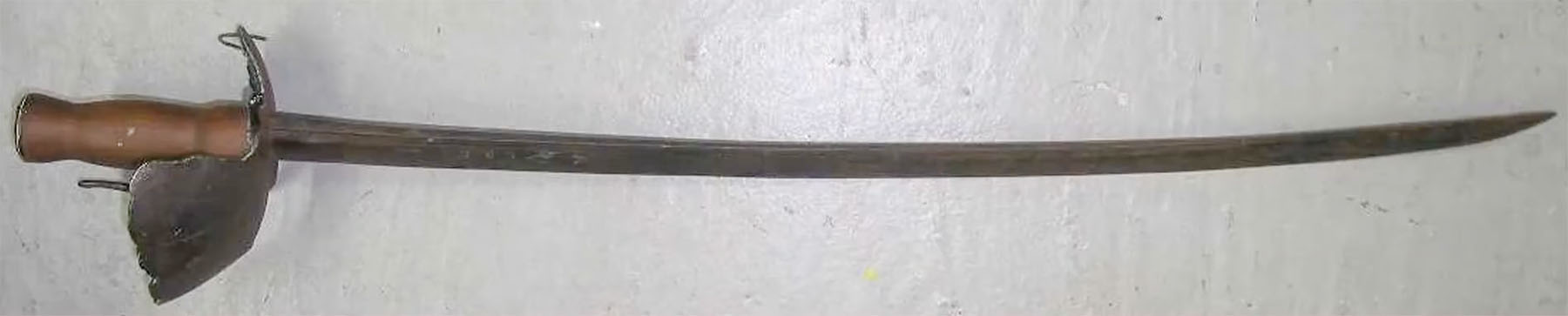
You will find William Bagshaw’s military sword from the Battle of Waterloo on display at the museum. This naval cutlass had a clam shell hilt. It was made in 1787 by the Dutch East India Company.
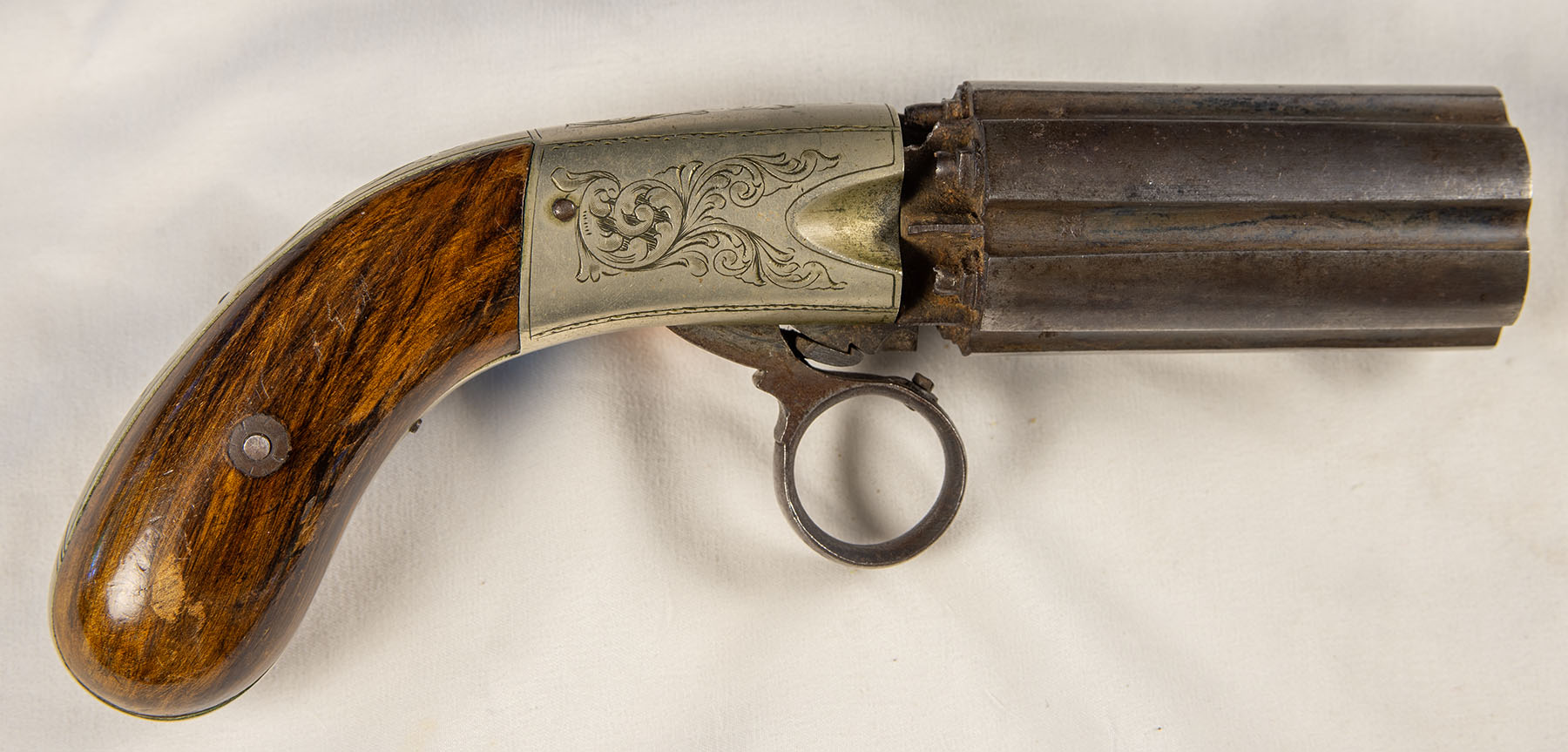
The museum has William Bagshaw’s Cooper Pepperbox Pistol in its archives. The gun fired six shots and the barrel rotated. It was muzzle loaded and made after 1830.
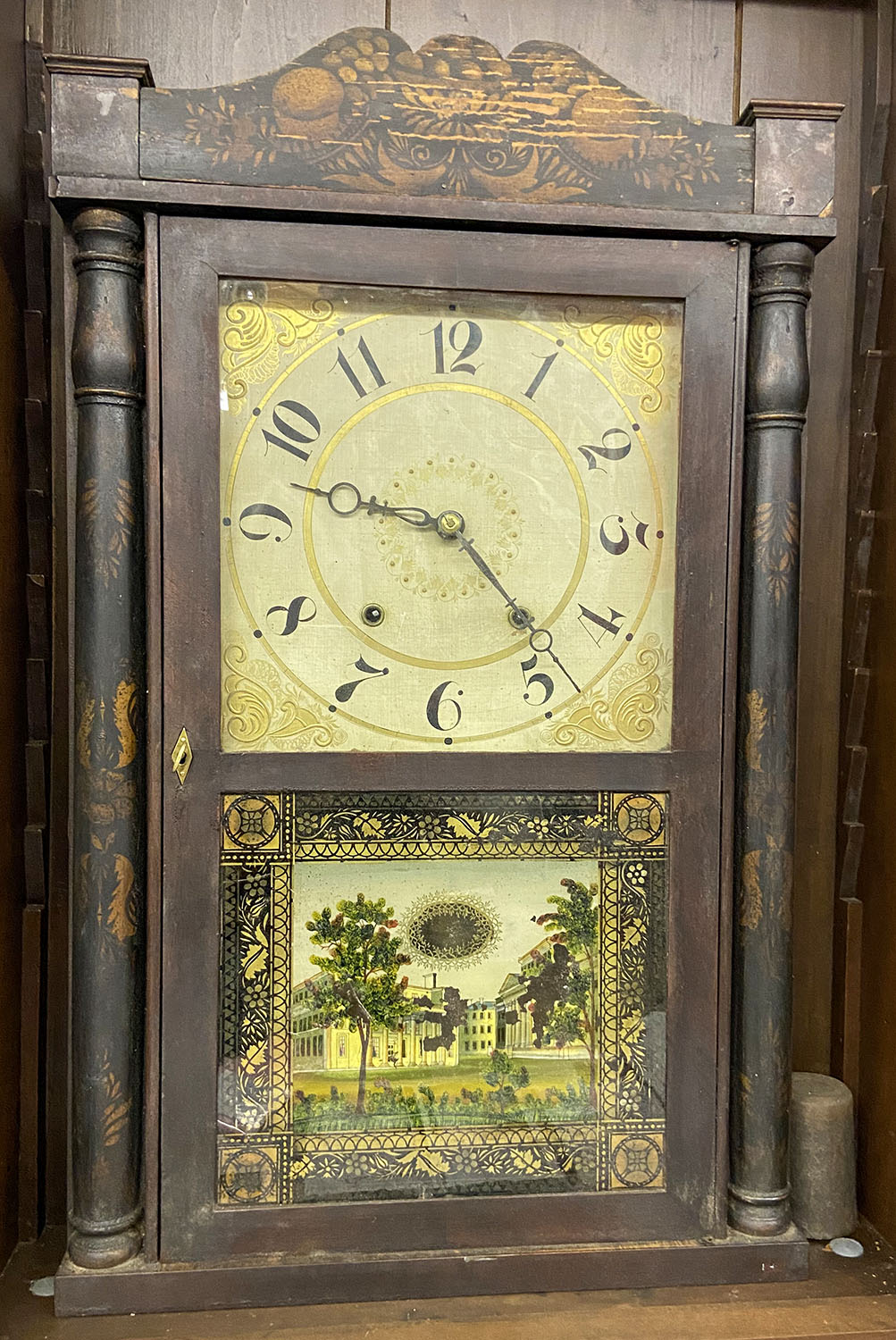
One of the treasures of our museum is the Bagshaw Clock built in 1824 in Plymouth, Connecticut. This is a 30 hour clock which was run by two descending weights. All the gears are made of wood.
While difficult to confirm, it has been said that William Bagshaw traded 100 acres of land for this mantle clock.
The clock has been restored to working order by Maurice Blanchard.
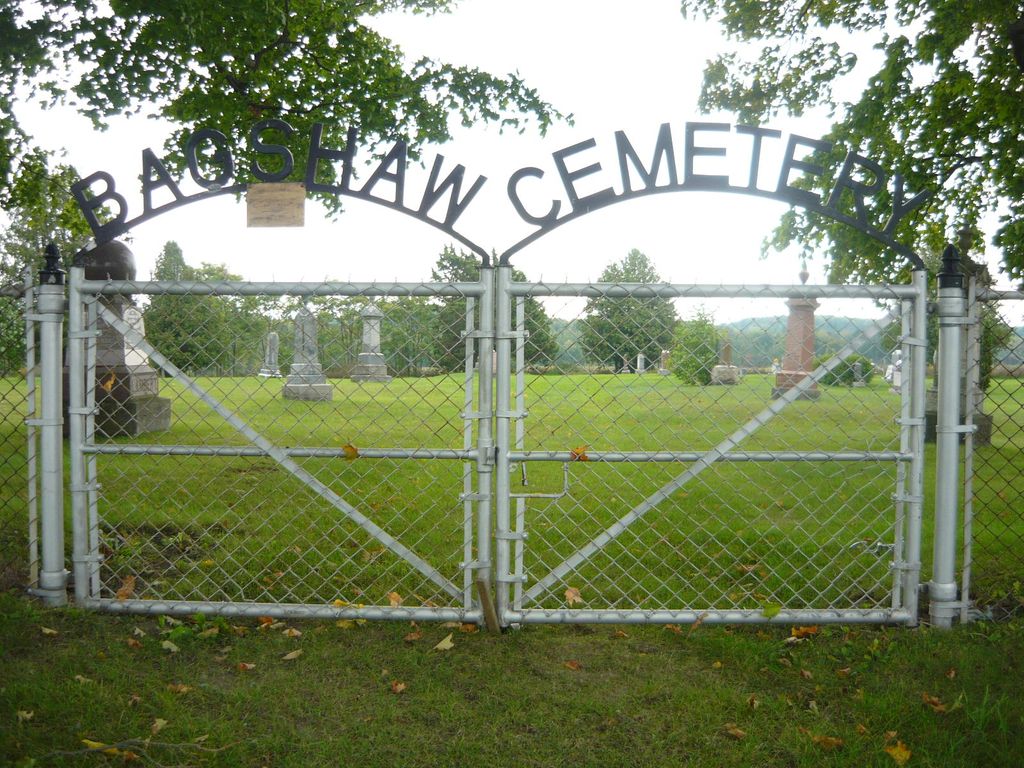
To learn more about the rich history of the Bagshaw family, plan a visit to the Bagshaw Cemetery. It is located on part of one of the Bagshaw farm properties on the south side of Concession 9 Brock Township, just east of the Brock Road.
Your visit may spark an interest in other members of the Bagshaw family who have had a significant on impact on their community.
As an example, Dr. Elizabeth Bagshaw was a famous pioneer in the fight for women’s rights during the depression. Concerned about women being unable to support large families she became a leading advocate for birth control support.
Dr. Bagshaw started the first birth control clinic in Hamilton and lived to be 101 years old.
As with Dr. Bagshaw, you could then find that your local historical society houses material that may inform your newfound interest.