By Joe Allin
Land Acknowledgement
The Sunderland & District Historicl Society embraces the land acknowledgement adopted on March 22, 2021 which was developed in consultation with the Chippewas of Georgina Island First Nation and the Mississaugas of Scugog Island First Nation.
The Township of Brock has traditionally been a hunting and fishing ground for First Nations people. We reside on and benefit from the Williams Treaty Territories, on the land of the Mississaugas and Chippewas. May we share the land as long as the sun rises, the grass grows and river flows.
Indigenous Presence
The focus of the Sunderland & District Historical Society is the history of Brock Township as it was structured prior to its 1975 amalgamation within the Region of Durham. The bulk of our collection relates to that time since the arrival of the Europeans. Before this this time, Indigenous presence in the area was undoubtedly sparse and transient. Prior to the 18th century, the Haudenosaunee people lived along the north shore of Lake Ontario and may have moved through our area. By 1700, Annishinaabe groups had pushed the Haudenosaunee back to the southern shores of what is now New York state. Accordingly, any Indigenous presence in the Sunderland area during the period of European settlement would most likely have been Annishinaabe, more specifically Misssisauuga and Chippewa people.
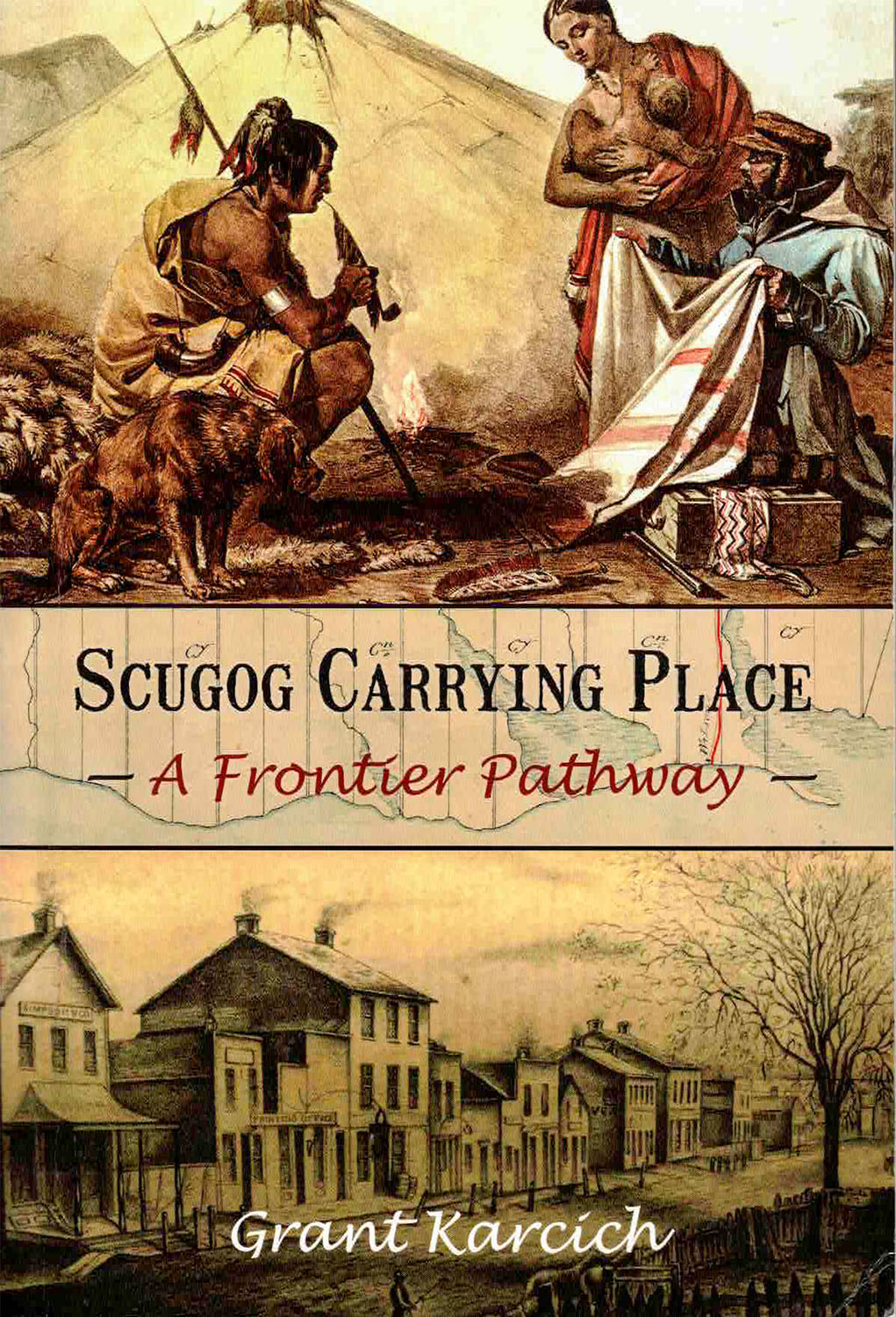
In its effort to understand the Indigenous history in our community, our society relied heavily on discussion gleaned from the Indigenous Studies Department at Trent University; the writing of Gidigaa Migizi, Doug Williams (This is Our Territory) ,a Nishnaabeg intellectual in the Curve Lake First Nation; the elders of the Mississaugas of Scugog Island First Nation and the work of Grant Karcich, a local historian.
Prior to the arrival of Europeans, the Indigenous People of the area were nomadic, living from the bounties of the land. The notion of land ownership was incongruous with this lifestyle. In the south of Brock, a portage route from the head of the Nonquon River, northwestward through the area now known as Wick, to the Beaver River is chronicled. Several Sunderland residents have recall of an outing with members of Reverend Newton Reed‘s TYRO youth group when an abandoned Indigenous campsite on the west bank of the Nonquon River was explored. This site is located just east of the present intersection of Old Simcoe Street and the Brock/Scugog
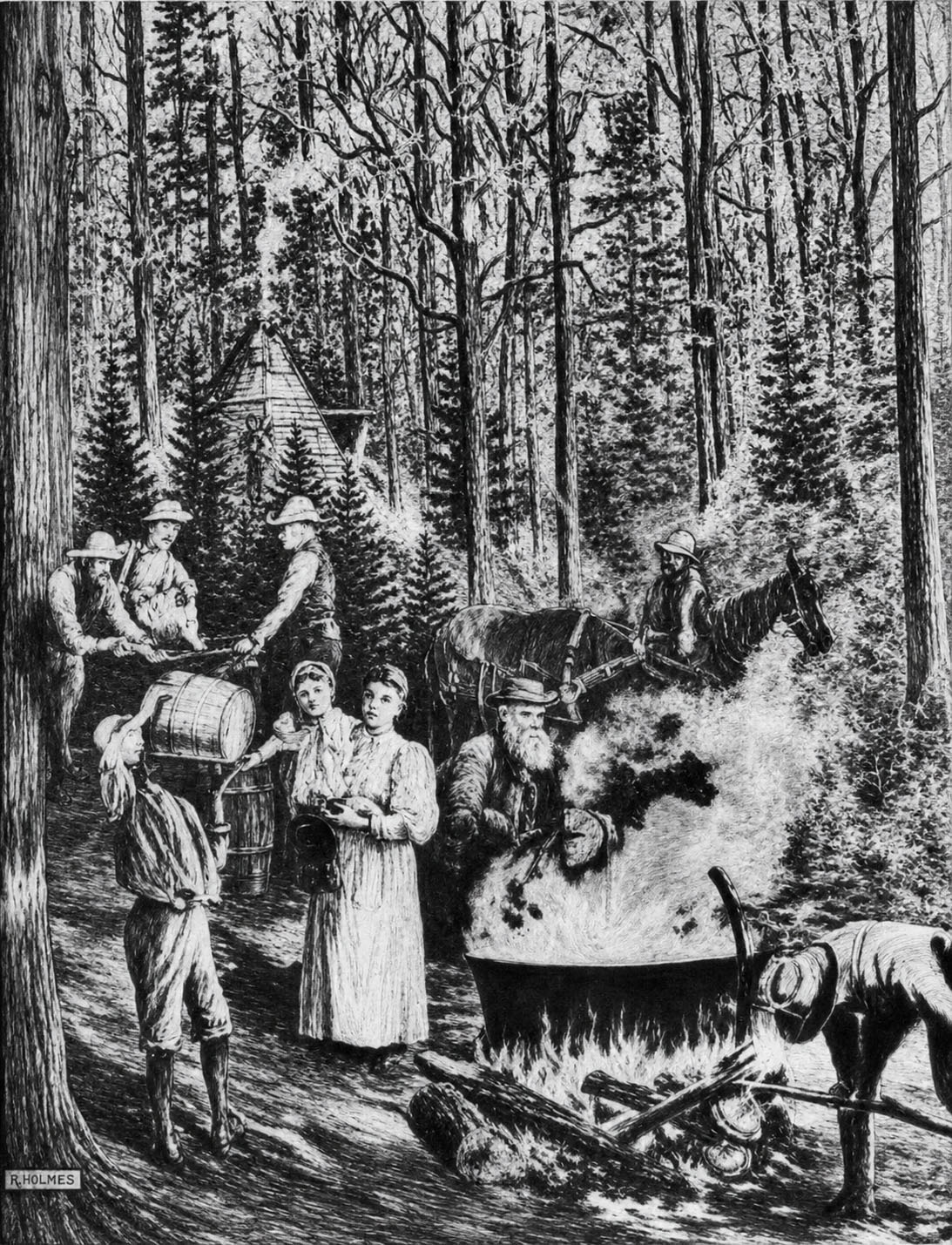
townline. It is reported that shards of pottery and arrowheads were prevalent on the site. Also, it is widely reported that Annishinaabe people attracted by a vibrant Maple bush would camp each Spring on the banks of the Beaver River at a site currently identified as Brock, Lot 17, Concession 12 . This activity is captured in a painting by Robert Holmes, a Cannington born artist.
Applicable Treaties
Two treaties between the British Crown and the Indigenous People have relevance to the lands around Sunderland
Gunshot Treaty
On September 23, 1787, representatives of the Indigenous Peoples from the Mississauga Nation met with agents of King George III to negotiate an historic land deal known as The Gunshot Treaty. While at the time, lands closer to Lake Ontario were of foremost concern in this negotiation (within hearing of a gunshot fired at the shore of the lake), the land that would eventually be surveyed and form Brock Township was considered part of this treaty. The treaty provided that the Indigenous People would retain their hunting and fishing rights and in exchange for land transfers would also receive monetary payment along with muskets, tobacco and other such staples. However, two very different notions of land ownership existed in the minds of the negotiating parties, undoubtedly contributing to a tension that has lasted through today.
Williams Treaty
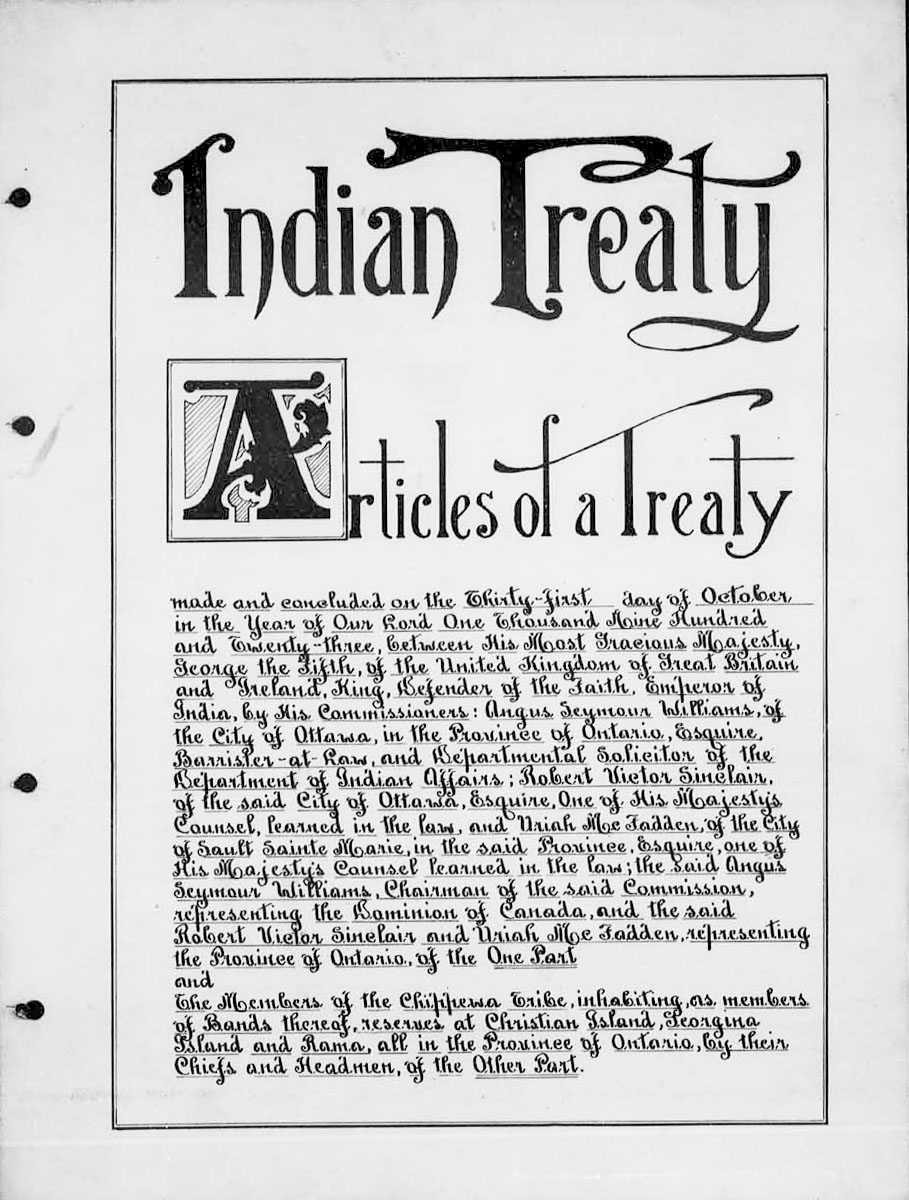
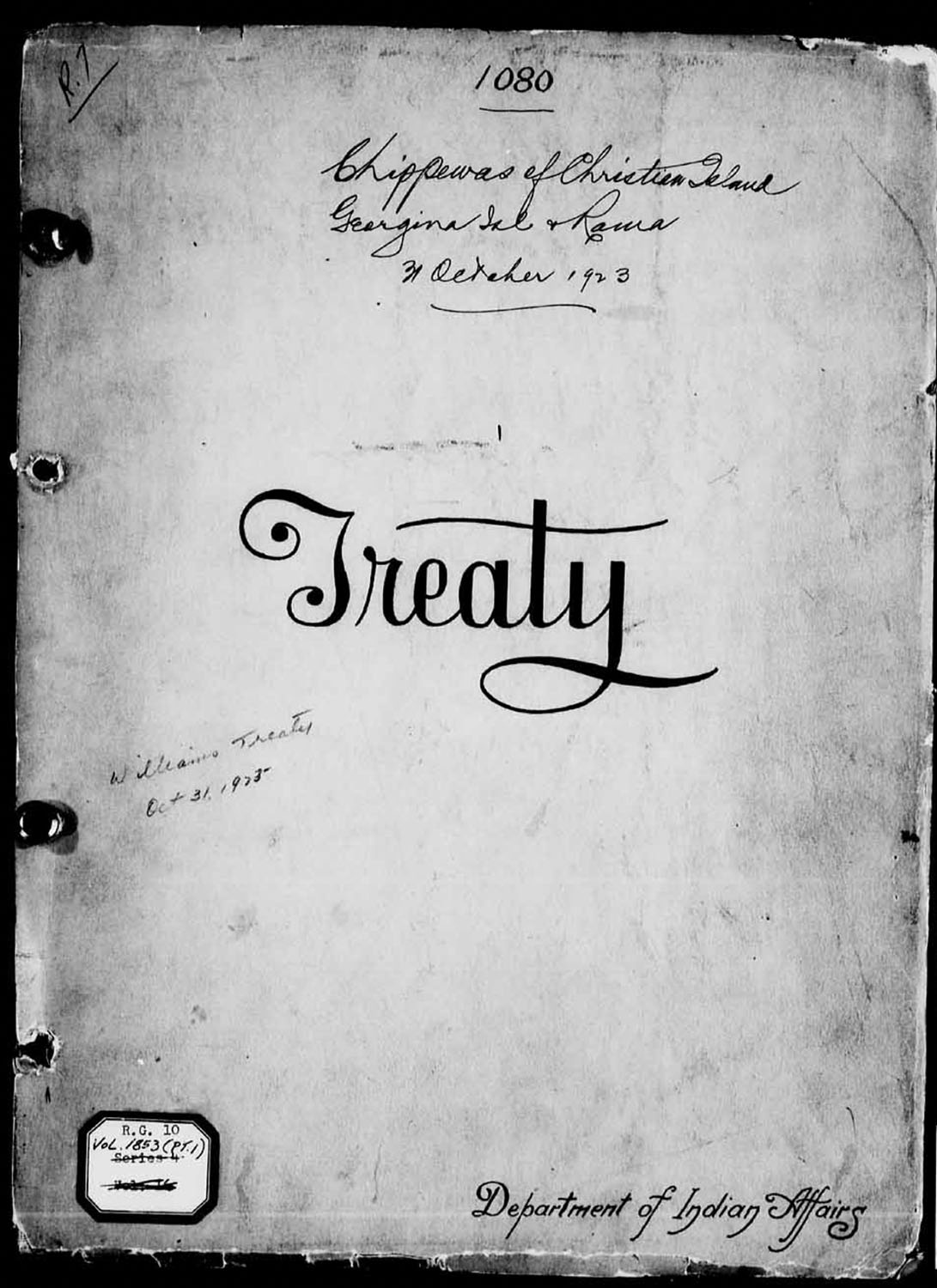
As farms grew during the nineteenth century, Indigenous complaints about settler encroachment on unsurrendered land grew louder. In 1923, the Crown and First Nations negotiated the Williams Treaty , (Clause 2 being applicable to Brock Township).The resulting treaty placed all non-reserve lands under control of the Crown and terminated Indigenous hunting, fishing, and trapping rights off-reserve. Given that this treaty was negotiated without proper translation into Anishinaabemowin, it created misunderstanding and a further erosion of Indigenous voice. Under the provisions of this treaty, the Annishinaabe lifestyle was restricted by hunting and fishing regulations, the destruction of ecosystems integral to this lifestyle (e.g. the flooding of thousands of acres of wild rice beds) and the massive clearing of forests. Being largely restricted to living on the reserve, Annishinaabe navigation of the Beaver River ended.
Renegotiation of Williams Treaty
In 2018, the First Nation signators of Williams Treaty successfully renegotiated a revised agreement. Kelly Laroche, Chief of the Mississaugas of Scugog, chaired the First Nations’ contingent in these negotiations. She was invited to speak at our 2023 annual general meeting. In her talk, Ms. Laroche, a lawyer and active participant in the reconciliation discussion offered her perspective on the indigenous peoples’ disposition in early treaty discussion, the ill effects of residential schools on her community and her hopeful vision for her community’s economic growth and development in a new era of reconciliation and community cooperation. Much of the content of her presentation is captured in the YouTube, Unlocking Economic Sovereignty Through SPV’s .