Sunderland & District Historical Society
January 2011
THE BARNARDO CHILDREN IN BROCK TOWNSHIP
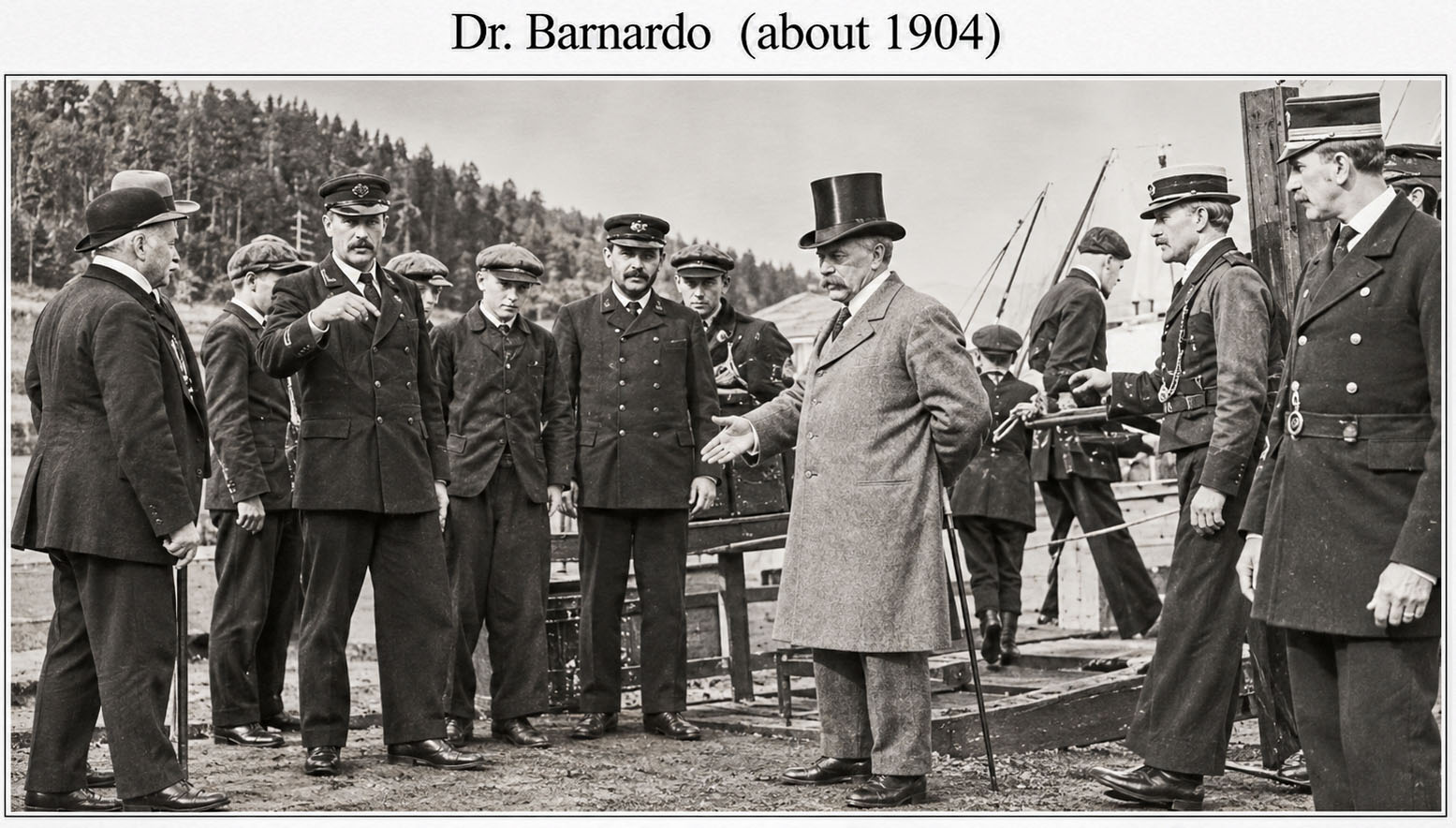
Dr. Thomas John Barnardo was born in Dublin, Ireland and lived from 1845–1905. From 1870 up to 1905 over 100,000 children were rescued, trained, and sent out to homes all over the world.
Although he was never a qualified doctor, he worked as a medical assistant in East London during the Cholera outbreak in 1866. He noticed the large number of homeless and destitute children in the cities of England. Dr. Barnardo and his organization sent over 30,000 children to Canada. He felt that he was doing God’s work by taking children off the street and training them so that they could be sent to a country with great agricultural potential and an extremely sparse labour force.
Farmers would receive a child from a Barnardo Home and enter into a contract with the orphan until they reached age 18. The farmer was to provide food, clothing, and shelter. The child was to get as much school as possible and was to attend church regularly. Although most children were treated humanely, there was no regular check or follow-up by the Barnardo Organization. It was a hard life and many orphans worked from dawn to dusk and were very isolated in rural communities. Some had been split up from their brothers and sisters. On the other hand, some families took the children in and eventually treated them as if they were equals to their own children and heirs to their estate.
Hazelbrae was a large house in Peterborough, Ontario and it was a home for over 10,000 Barnardo girls in a period of 40 years. The home opened on July 22, 1884 and Dr. Barnardo came there in August and spoke to a packed crowd at the Bradburn Opera House. He came back again in 1890 with concerns that the girls at times did not have enough adult supervision. He found, however, that the new manager Miss Woodgate was doing an excellent job.
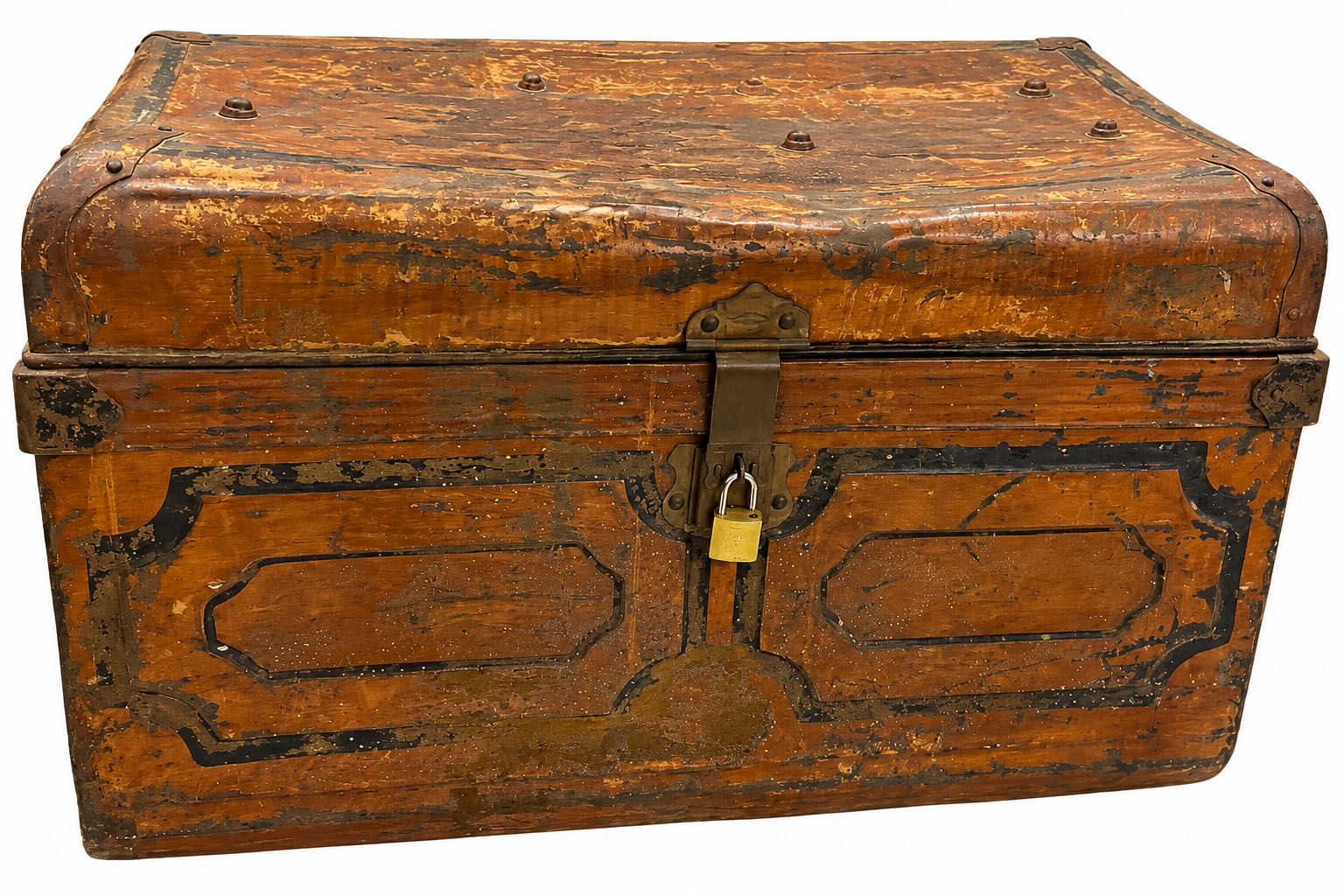
Every child was given a wooden box bearing their name and in it was a pair of new shoes, clothing for all seasons, and a Bible. Some of the early boxes were wooden; by later ones had a metal waterproof alligator skin more suited for sea voyages. When the children reached Canada they were placed in “receiving homes” until someone answered newspaper ads and picked up a “home child.”
Later, as concern rose about the welfare of some of the young orphans, only older teenagers were allowed to come to Canada and finally by 1939 the last “Home” children came to Canada in a group of 21 boys and 13 girls. Dr. Barnardo’s motto was “No destitute child ever refused.”
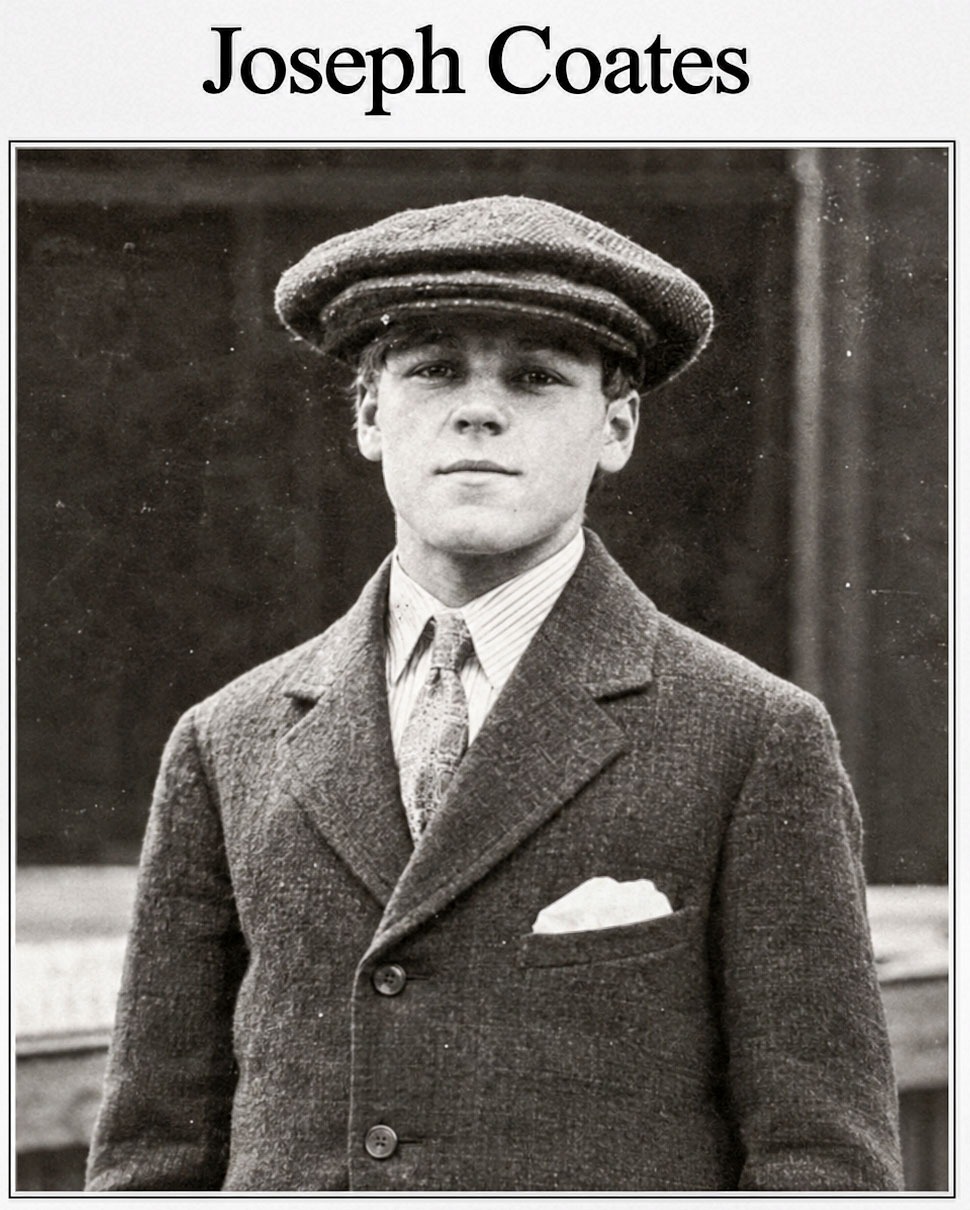
Joseph Coates came to Canada at age 15 on June 24, 1924, on the ship Minnedosa. He stayed at a receiving house on Jarvis Street in Toronto until he came to a farm in Brock. He was paid $10 the first year, $20 the next year and $70 the third year and could not collect the money until he was 21. On the boat were over 300 children and the trip took 14 days.
Henry Brown was another Barnardo boy from England. He worked for Tommy and Mabel Marquis on the 3rd of Brock at lot 1. He served in the Second World War and later had his own farm.
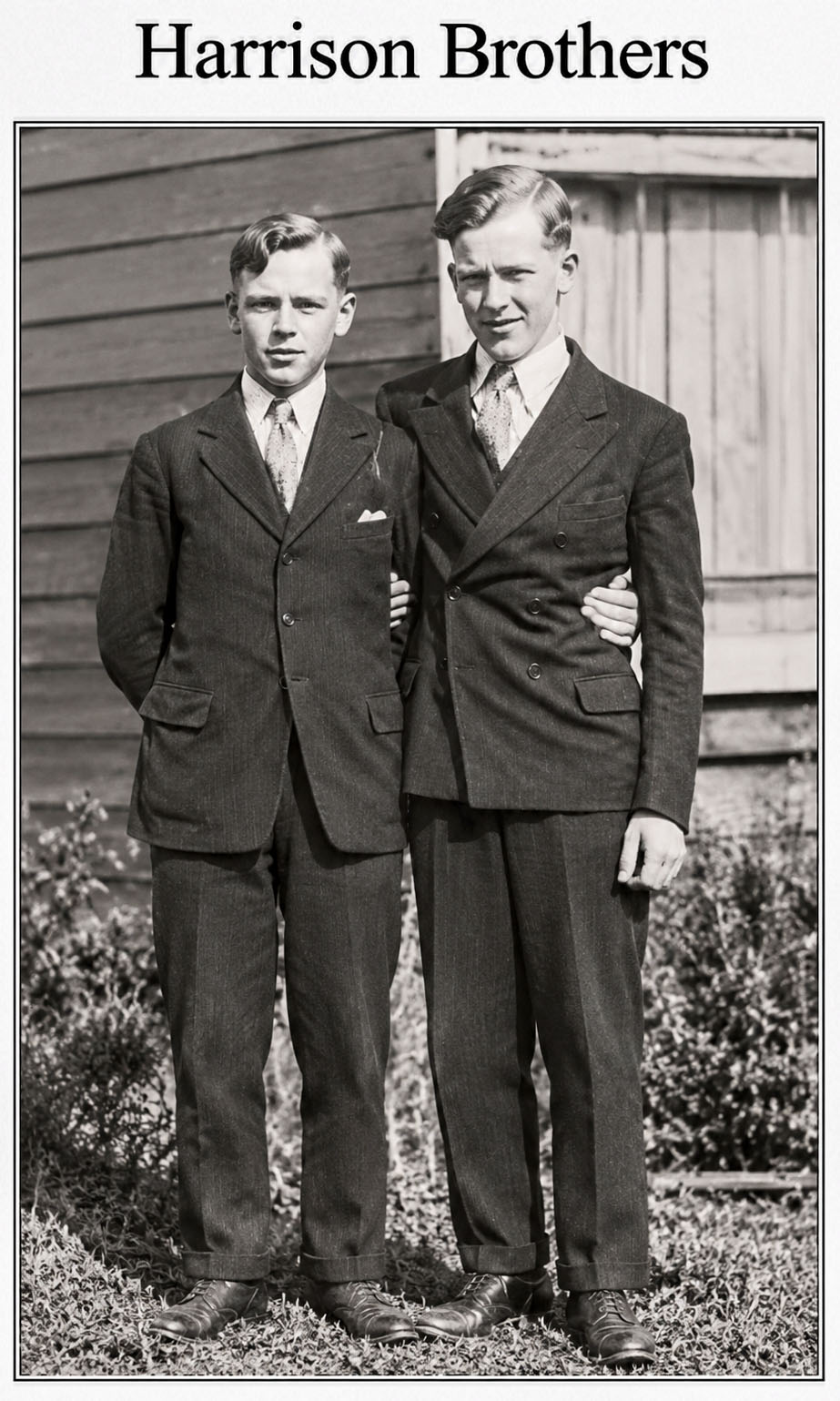
Ken Harrison, age 14, and Rupert Harrison, age 11, set sail for Canada in March 1925 from Liverpool aboard the ship S.S. Montclare. They arrived at St. John, New Brunswick on April 4, 1925.
They stayed at the Barnardo Headquarters on Jarvis Street and then came to Sunderland by train. Ken worked on the farm of Bert Waddell on the 7th concession at lot 13 for 5 years and later joined the army in 1939 in the signal corps and later as a mechanic for the air force. He returned to Sunderland and was the Brock Township clerk/treasurer for many years. Rupert stayed with the Wesley Baker family in Valentyn and later became a school principal in Oshawa.
Alice Derbyshire, born in 1895, came to Brock and married George Wright. In the Archives of Canada, it shows an A. Derbyshire came on the ship Dominion in 1905 at age 10. She left on May 25, 1905, and arrived at Quebec on June 5, 1905. The matron for the voyage was Mrs. Lloyd F. Bell, and she had under her care 104 girls.
The Foster siblings who lived in Reach Township came in 1922 on the Minnedosa: Louisa Minnie Foster, age 12; Stanley Foster, age 10; Reg A. Foster, age 15.
Their ship, the Minnedosa, left Southampton on September 14, 1922, and arrived at Quebec on September 22. Their destination was Toronto. Minnie stayed with the Harold Smith family at a dairy farm in Uxbridge and eventually married William Murray. Reg Foster married Velma Rodd and Stan married Ruth Pilkey. Both brothers lived in Greenbank.
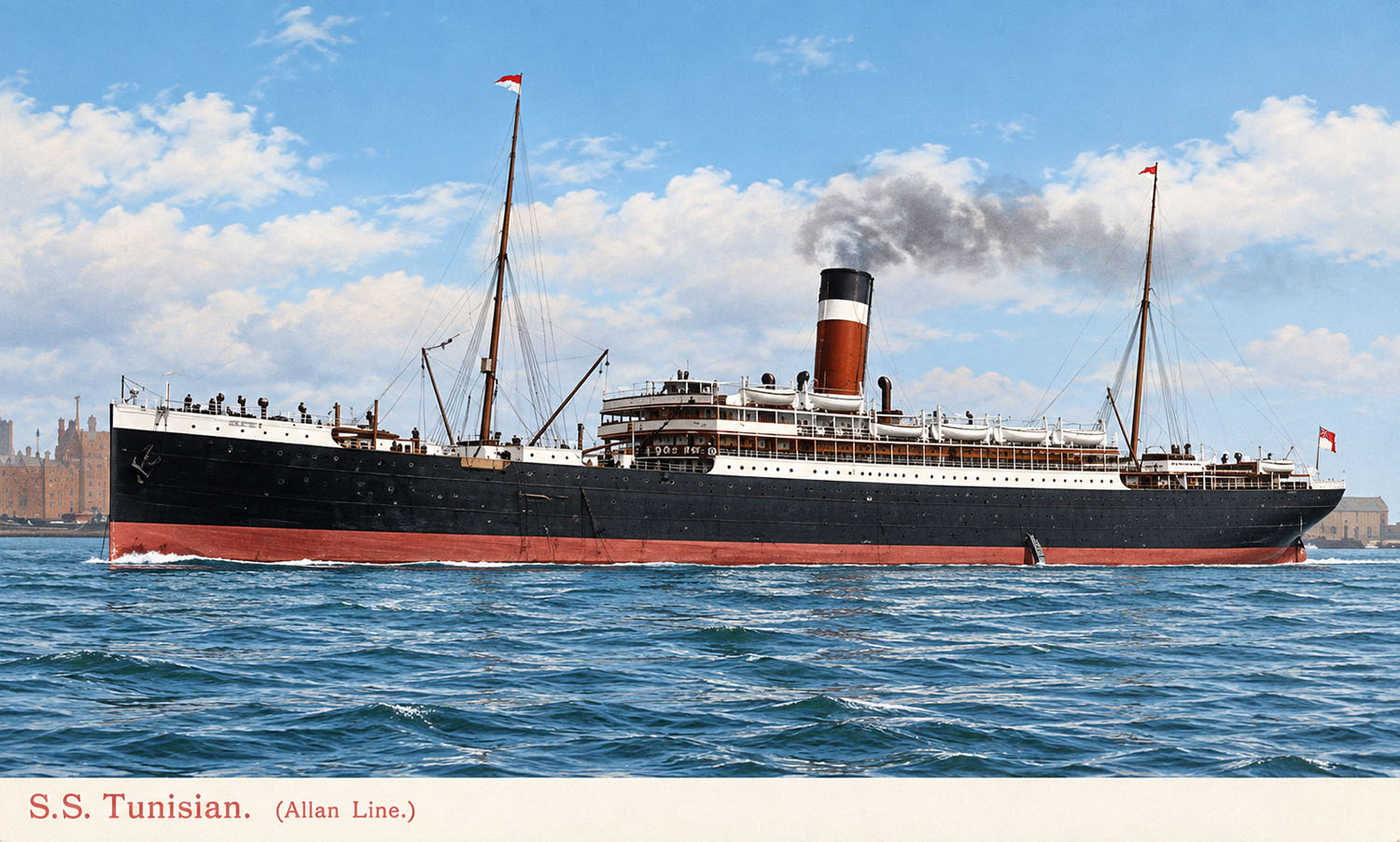
Edith M. Pocock, age 12, and her sister Elsie E. Pocock, age 10, came in 1910 on the ship Tunisian. They left Liverpool on March 10 and arrived in Halifax on March 18, 1910. Edith married John Howard Brethour, who lived on the 5th of Brock. Elsie Pocock married Gordon Sackett and lived to be 101 years old.
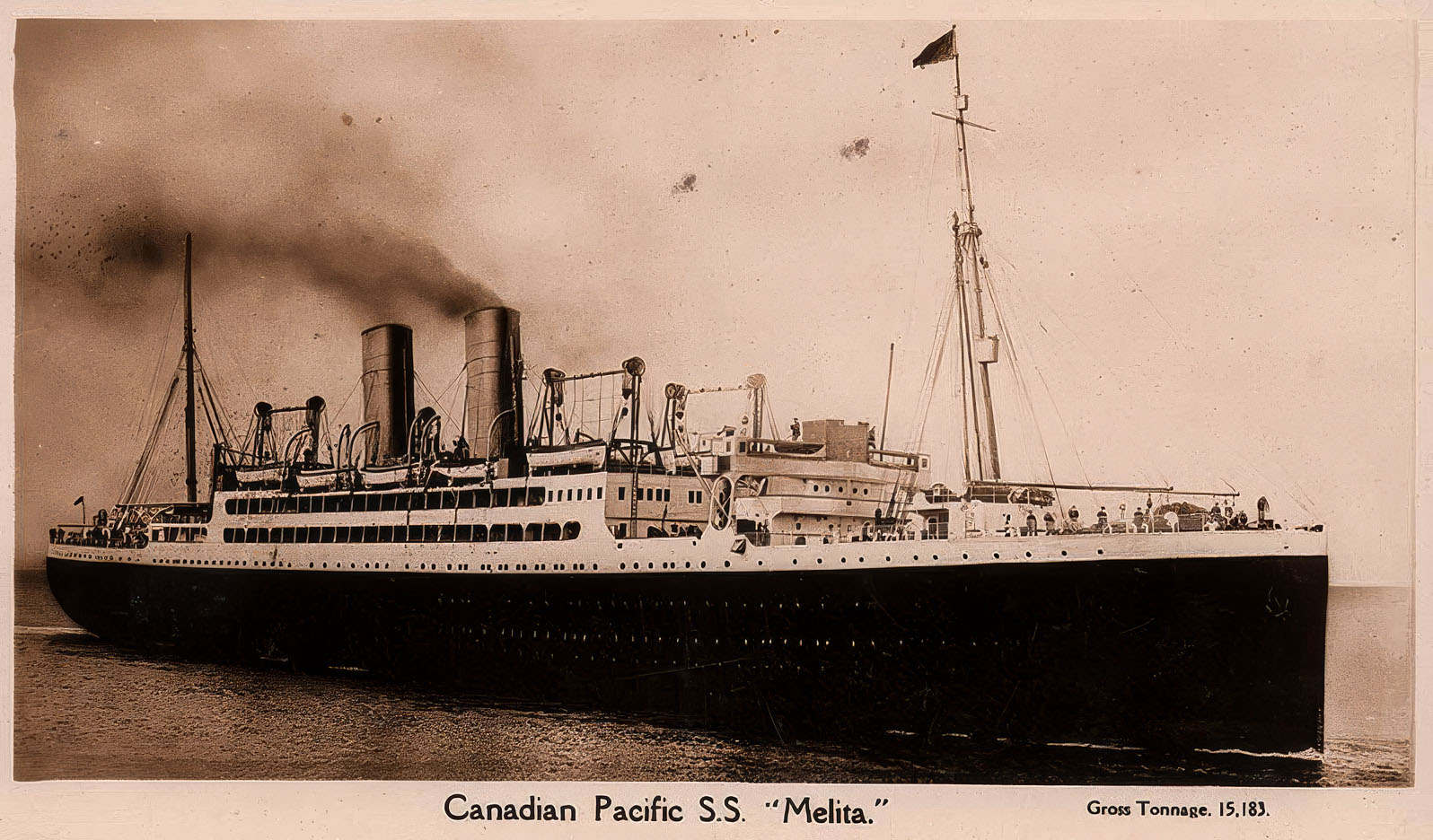
Albert George Jex came on April 15, 1923, aboard the ship Melita. It left Southampton on April 7 and the Barnardo party had 132 boys and 12 girls. The Melita was launched in Liverpool in 1917 and was 520 feet long. It was part of the Canadian Pacific Steam Ship Line and went from Liverpool to St. John, N.B. Albert’s daughter Dorothy married Keith Shier, former mayor of Brock Township.
Edward Lock Lill (Eddie), age 10, came to Canada aboard the Sicilian and left Liverpool on February 26, 1911. He arrived in Halifax, Nova Scotia on March 9. Also aboard was Frank Lock. Lill, born in 1903 and likely his brother. On his tombstone in the Sunderland Cemetery is a copy of an award from the Dr. Barnardo’s Homes “For Good Conduct and Length of Service,” Edward L. Lill, born 1901. Eddie worked on the farm for Ray and Cliff Brethour in Brock Township.
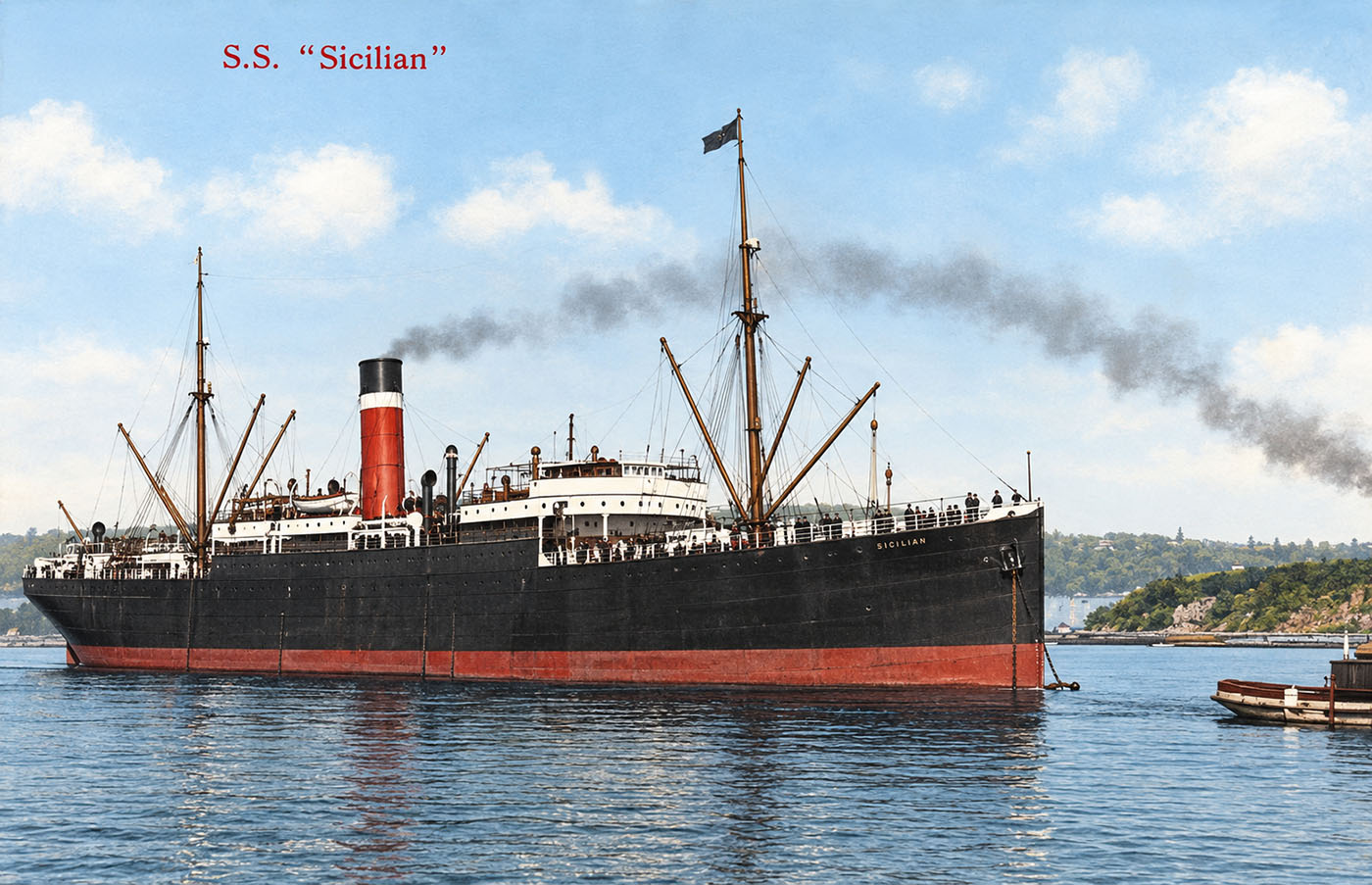
The S.S. Sicilian was built in Belfast in 1899 for the Allan Line (Montreal Ocean Steamship Company). It sailed the route from London, Quebec to Montreal from 1908 to 1914 with peacetime passengers.
The Tunisian was built in Glasgow, Scotland and launched in 1900 as part of the Allan Line. In 1907 it was chartered by the Canadian Pacific Line to make trips from Liverpool to St. John, N.B. Troops were sent back to England on her in 1914 as part of the Canadian Expeditionary Force. The ship was 500 feet long and about 60 feet wide. In 1922 she was renamed the Marburn.
Most of the Barnardo children came in the time period from 1880 to 1914. James Jarvis was the first one sent in 1868, followed by a group of 50 boys in 1893 and a group of 72 girls in 1893.
Inside the Barnardo Trunk for a boy were the following: a winter coat and boots, a cap or hat, socks and slippers, shoes, a jacket or sweater, underwear and toiletries, a suit, a few shirts, two ties, work trousers, handkerchiefs, braces and a belt, a Bible, a traveller’s guide, and Pilgrims Progress.
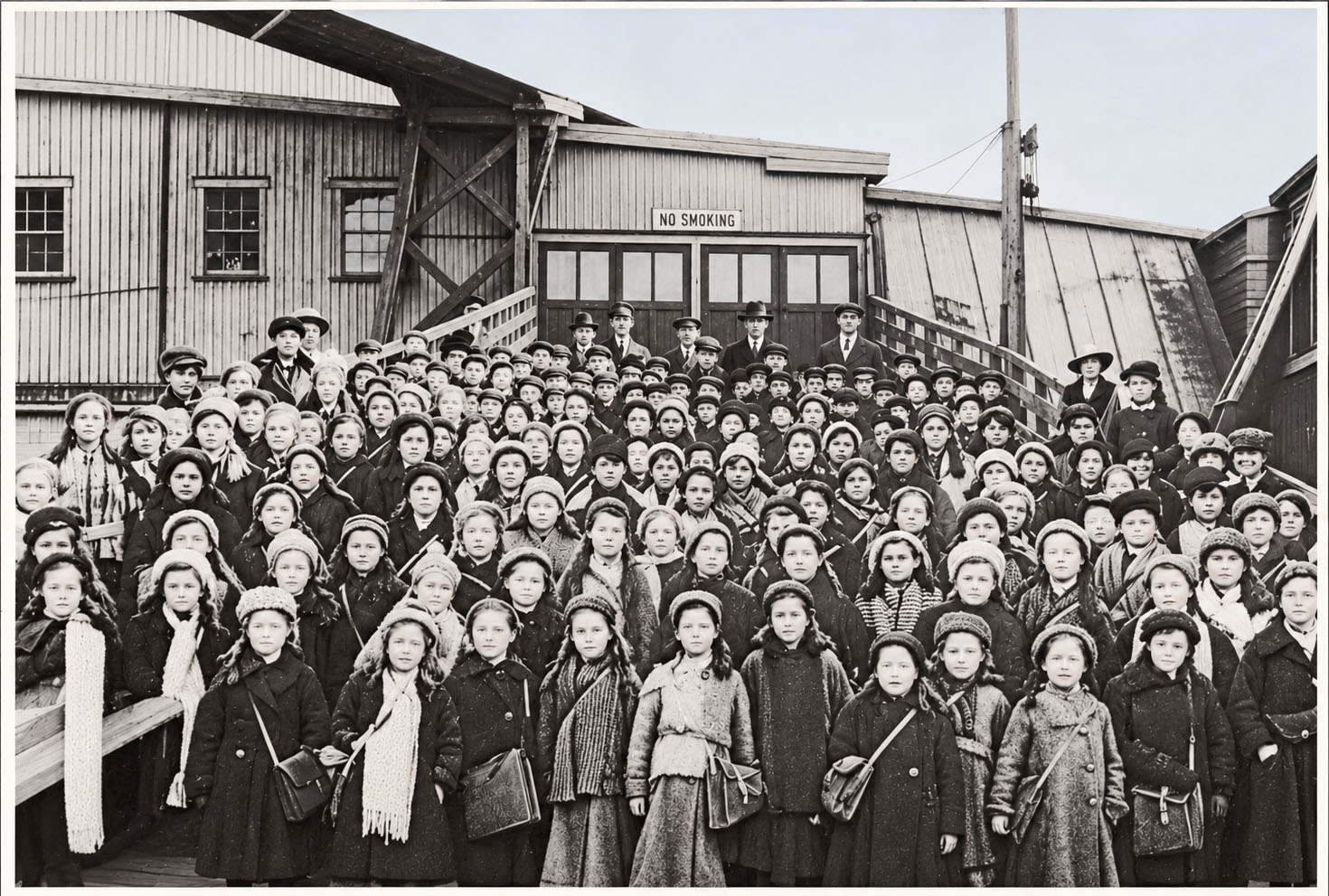
The ships arrived at Halifax, Montreal, or Quebec City and the children went by train to Toronto, Peterborough or Russell, Manitoba. Any child from age 14 to 18 was expected to work as an adult and usually got $100 to $200 plus room and board for their work term. Because of the great demand for this cheap labour, boys often moved 3 times during their 5-year work term. Only one in six of these children returned to Britain after they were 18. Many of the others moved to the urban areas seeking better paying jobs.
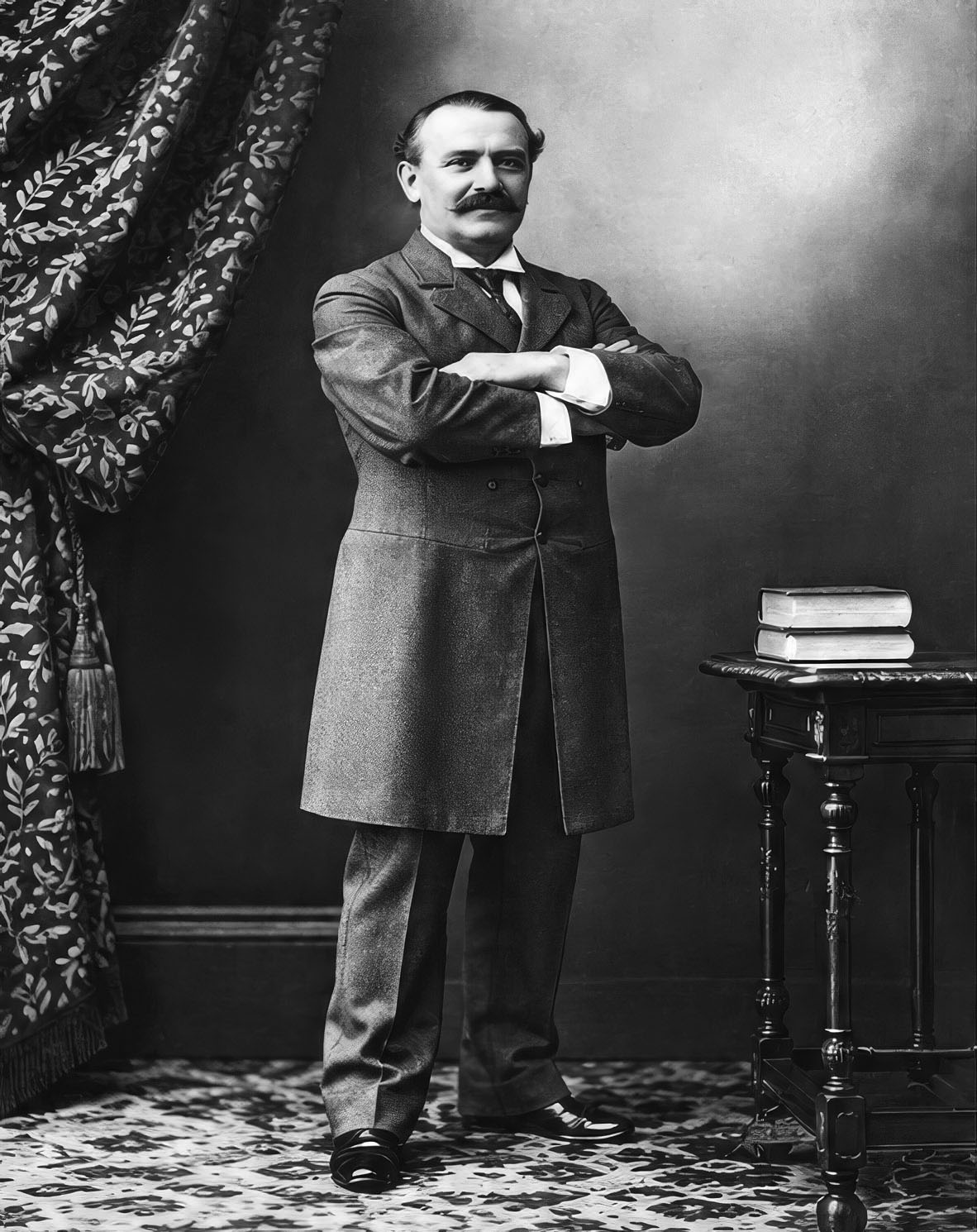
Dr. Thomas John Barnardo (1845–1905), British philanthropist, founder and director of homes for children in need or peril. A leading humanitarian, Dr. Barnardo had a genuine and compassionate concern for young people. Doctor Barnardo – Child Life: Victorian and Today J. Wesley Bready George Allen & Unwin Ltd. London 1930
HOW IT ALL STARTED (Parts of an article by Charlotte Gray, 1979)
In 1866 Thomas Barnardo, a medical, was reading scriptures to a group of street urchins in a warm schoolroom and, as he sent them out the door, he noticed one lad crouched by the fire. He told the lad it was time to go home.
“Ain’t got no home sir,” was his reply. “Where do you live and where are your parents?” asked Thomas.
“Ain’t got no parents and Oi don’t live nowhere. Me name’s Jim Jarvis and Oi think I’m ten years old. Are there many boys like you with no parents or home?”
“Oh yes sir,” said Jim. “Eaps and eaps, more’n Oi could count.”
And so began the task of Dr. Thomas Barnardo to take in and send to Canada and Australia thousands of homeless children.
By 1877 Thomas Barnardo had 500 children living in his training home. In 1888 that number had swelled to 3000.
WHY SEND THEM TO CANADA?
Sending children to Canada was an inexpensive solution to the problem for Britain and the cost of steam passage to Canada was low. The Canadian government was eager to take in colonists to help work the farms in Ontario and in the western provinces. They offered $2 for each young immigrant and there were 10 applicants for every child who arrived. During a visit to Canada in 1884 Thomas Barnardo decided on the following principles. Only the cream of the crop were to be sent abroad. They would be placed in “receiving homes” before being sent to carefully checked homes.
There would be annual inspections to ensure that there was proper supervision. The Barnardo Organization was the legal guardian of each child until they were 18 and the moral guardian until the boys were 21 and the girls were married.
TWO SIDES OF THE COIN
John was put on a train in 1910 and sent up to Lake Simcoe only a few days after he arrived in Toronto. “The farmer who took me was a real mean guy. It didn’t take much for him to beat me as I was a home boy. I was up at 4 am and had to do the stables if I wanted to get any breakfast. Fred who came out in 1927 arrived during the corn harvest.
“The farmer, his wife and I ate 33 cobs in one sitting. They loved me like their own child.”
“My first winter I grew 6 inches, and they got me a set of new clothes.”
Ships held 400 children. There was overcrowding, limited facilities and poor ventilation.
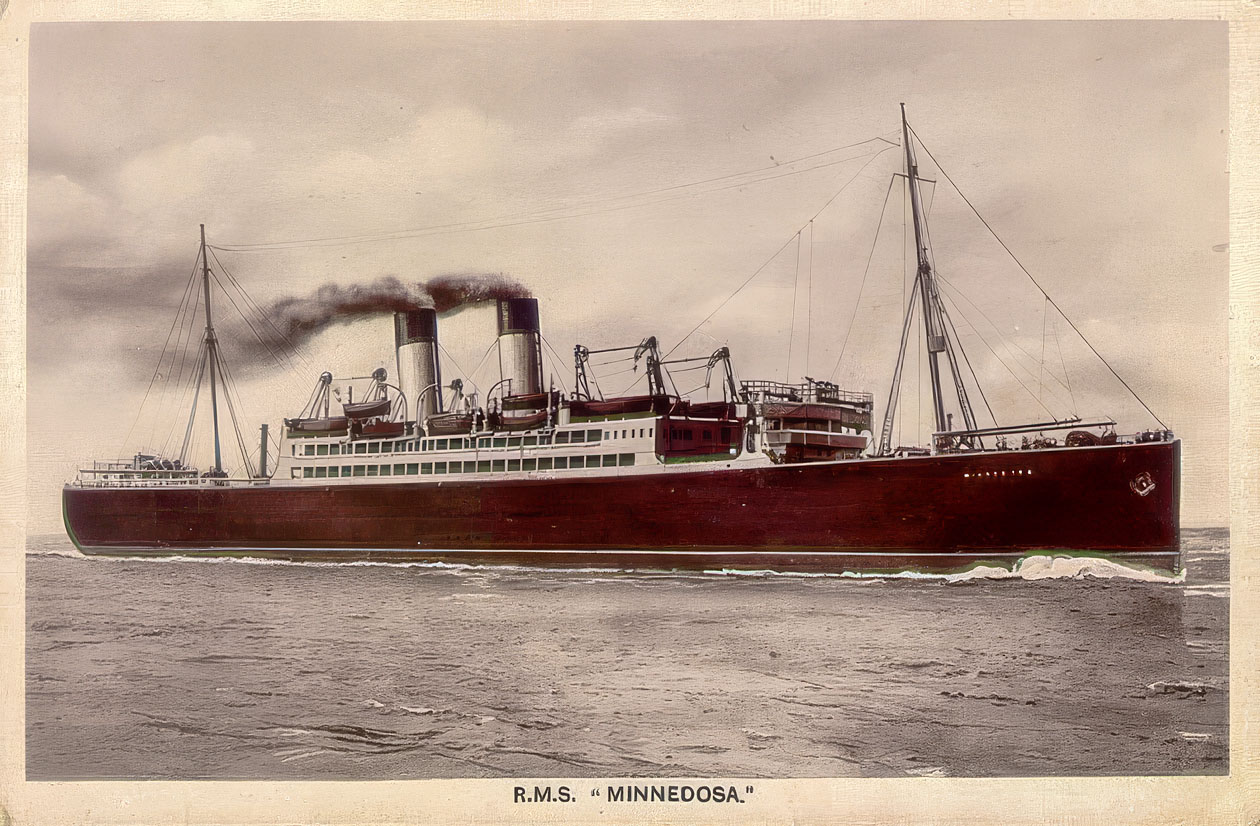
The Minnedosa, after being refitted, brought Canadian troops home from World War I in 1918. Then, on it sailed the Liverpool to Canada route until 1922. It was part of the Canadian Pacific Line. Joseph Coates left England aboard this ship in 1920. Ken and Rupert Harrison were aboard the S.S. Montclare.
THE BARNARDO HOMES
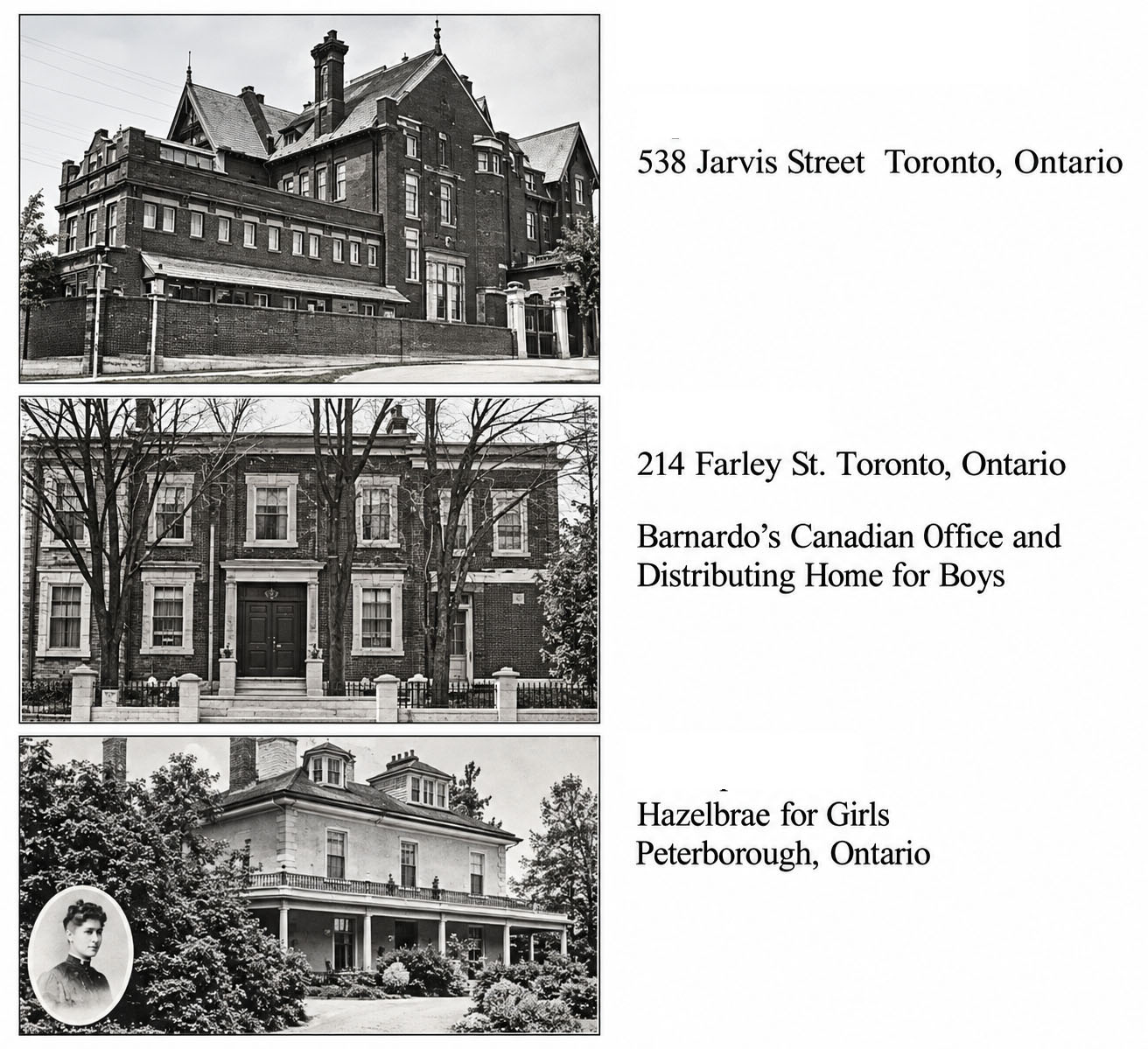
The children had to have been trained and were not to be sent out unless they were in good health. In the school for boys, they often stayed a few days and were sent out by train to rural Ontario.
If problems occurred, the children were sent back to these homes and then issued new locations. Dr. Barnardo came to Canada many times and would visit the children all over the country to see that they had been well placed. He would talk to each child privately on his visit.
ARRIVAL OF BARNARDO PARTIES (Under age 12 are children)
| Year | Date | Ship | Destination | Number |
| 1894 | April 9 | Sarnia | Toronto | 50 boys |
| July 9 | Sardinian | |||
| Sept. 8 | Laurentian | Toronto | ||
| 1895 | April 1 | Parisian | ||
| Sept. 15 | Sardinian | |||
| Nov. 9 | Mongolian | Toronto & Quebec | ||
| 1896 | Aug. 8 | Scotsman | ||
| 1897 | Apr. 3 | Labrador | Russell, Manitoba | 30 boys |
| Toronto, Ontario | 95 boys | |||
| June 19 | Labrador | Winnipeg | 60 children | |
| Russell | 25 boys | |||
| Peterboro | 26 children | |||
| Toronto | 77 | |||
| Aug. 7 | Vancouver | Peterboro | 92 children | |
| Toronto | 25 children | |||
| Winnipeg | 22 children | |||
| Oct. 3 | Peterboro | 106 children | ||
| Toronto | 41 children | |||
| Winnipeg | 45 children | |||
| Russell, MB | 14 boys | |||
| Nov. 6 | Labrador | Peterboro | ||
| 1898 | July 30 | Vancouver | Boys | |
| Sept. | Dominion | Children | ||
| 1899 | Sept. 22 | Arawa | ||
| July 29 | LakeHuron | |||
| 1900 | June 16 | Cambroman | Peterboro | 120 |
| U.S.A. | 150 | |||
| July 28 | Tunisian | |||
| Oct. 4 | Sarmatian | Peterboro | ||
| 1901 | June 15 | Tunisian | Peterboro | |
| July 29 | Numidian | |||
| Aug 2 | Parisian | 101 | ||
| Sept. 27 | Tunisian | 221 | ||
| 1902 | April 2 | Dominion | Portland | |
| July 24 | NewEngland | |||
| Oct. 6 | Colonian | Portland | ||
| 1903 | April | Kensington | ||
| July 31 | Southwark | |||
| Oct. 9 | Southwark | |||
| Oct. 29 | Bavarian | |||
| 1905 | June 5 | Dominion | Peterboro | 101 |
| July 1 | Southwark | |||
| Aug. 5 | Southwark | |||
| Aug. 12 | Dominion | |||
| Oct. 6 | Canada | Toronto | 87 boys | |
| Peterboro | 89 girls | |||
| 1906 | June 3 | Dominion | Toronto | |
| Aug. 11 | Dominion | Toronto | ||
| Oct. 21 | Dominion | Toronto | ||
| 1907 | May 7 | Dominion | Toronto | |
| July 20 | Kensington | Toronto | Boys | |
| Sept. 23 | Dominion | Toronto | ||
| 1908 | May 31 | Dominion | Toronto | |
| Aug. 8 | Dominion | |||
| Oct. 19 | Dominion | |||
| 1909 | Mar. 6 | Toronto | Children | |
| 1910 | Mar. 18 | Tunisian | Toronto/Peterboro | |
| Aug. 5 | Tunisian | Toronto/Peterboro | ||
| 1911 | Oct. 6 | Corinthian | ||
| 1912 | June 23 | Tunisian | Toronto/Peterboro | |
| 1914 | Mar. 29 | Sicilian | Toronto/Peterboro | |
| June 27 | Alsatian | |||
| July 1 | Corinthian | Toronto/Peterboro | ||
| Sept. 22 | Corinthian | Boys | ||
| 1915 | Mar. 28 | Scandinavian | ||
| Sept. 22 | Sicilian | Toronto/Peterboro | Children | |
| 1921 | Sept. 23 | Minnedosa | ||
| 1922 | Minnedosa | |||
| 1923 | Melita | Toronto |
SHIPS CARRYING BARNARDO CHILDREN
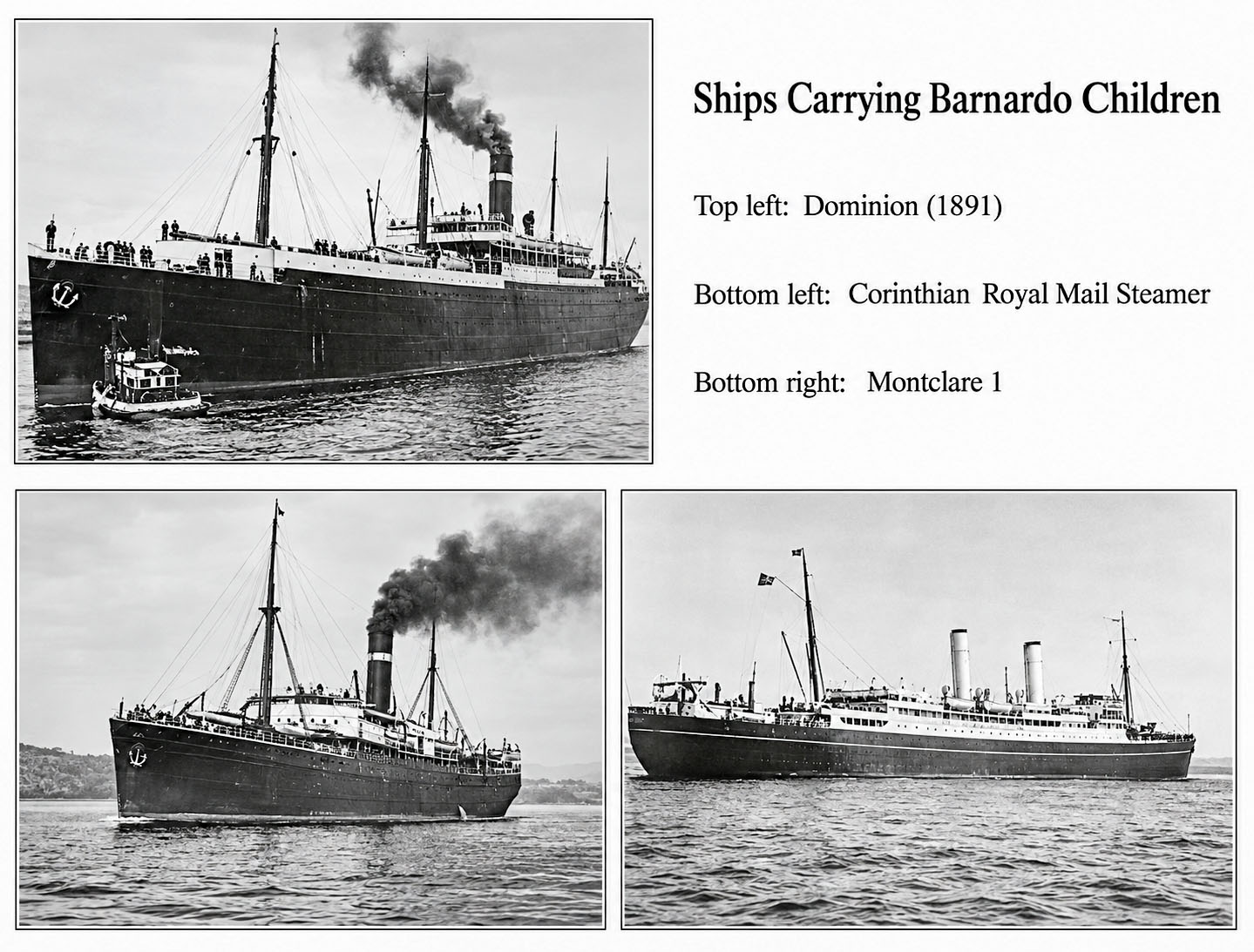
FROM THE “LITTLE IMMIGRANTS” BY KENNETH BAGNALL
Even before Barnardo reached Toronto in August of 1900, hundreds of former Barnardo boys had read of his visit in the “Ups and Downs” quarterly newsletter from his homes. They came to the city from all over southern Ontario and were crammed into every possible space at 214 Farley Avenue, the home into which each had been received as children. They longed to see a father who was vivid only in memory and wondered if he would still recognize them after years of separation.
For an entire day almost 500 young men sat around on the lawns quietly waiting. That evening they sat row upon row in the home, each one wearing his button bearing the likeness of Dr. Barnardo. Each one was among the only brothers he had known and each one waiting for the only father he would ever know. Whatever the flaws were inherent in this child immigration, Barnardo’s commitment to the children was genuine. Their affection for him was deep and permanent.
That evening halfway through the meal, Barnardo appeared suddenly, standing alone in the doorway. “There was a second of absolute quiet and strange stillness, as if a rush of memories had paralyzed every tongue and every muscle.”
“In the strained look on every face one could read the inward working of grateful hearts and could understand the emotions which Barnardo had evoked.” Then all sprang to their feet and in thundering cheers which rang out again and again Dr. Barnardo learned that his hold on the hearts of his old boys was as firm as in the days of long ago.
On a boat trip of Toronto Harbour, the next day Barnardo moved among them, speaking to each one and with his incredible memory recalling something from the life of every man on board. After sailing in the harbour for two hours while listening to his lads sing “The Maple Leaf Forever” and “The Boys of the Old Brigade,” Barnardo made his last speech to the boys of Ontario. He told them that the ideal life was a life lived for others and that they should always look out for the welfare of the younger children, those who lived near them.
There was a prayer, his final goodbye. Frank Vipond recalling the evening said, “The influence upon others of a great man often survives the strain of separation and sometimes outlives the man. The influence of a great and good man always does.”
From here Barnardo journeyed to Hazelbrae in Peterborough and then to the farm in Russell, Manitoba. It was his last of 4 trips to Canada.
Louisa Dixon came to Canada aboard the Corinthian on April 1, 1912 at age eleven. The ship left London on March 14th and arrived at St. John, New Brunswick. With her were 104 other girls in a Barnardo Party bound for the Hazelbrae Receiving Home in Peterboro, Ontario. Later Louise married Duncan S. Martin.
Margaret Coombes was born in England on October 25, 1892 and came to Canada on May 29, 1904 with a Barnardo Group aboard the S.S. Kensington. This ship was built in 1893 as a passenger vessel and steamed across the ocean until 1910. Margaret is shown in the census of 1911 as a lodger with Edmund and Hannah Watson in Somerville Township near Fenelon Falls. Her neighbour was Gregory Suggitt and she later married his son William Eli Suggitt. The couple moved to the 6th concession of Brock on lot ten and had a family of Wilmot, Amy, and Alvin Suggitt.
Barnardo Children in Brock And Reach printable
Archival images from ggarchives.com and AI